
The takeout box was lunch twice
The noodles arrive in a container deep enough to hide the bottom. You eat until the meeting reminder appears, close the lid, and put the box in the office...
By PixNutri Editorial Team · Published November 23, 2026 · Last updated November 23, 2026 · 5 min read
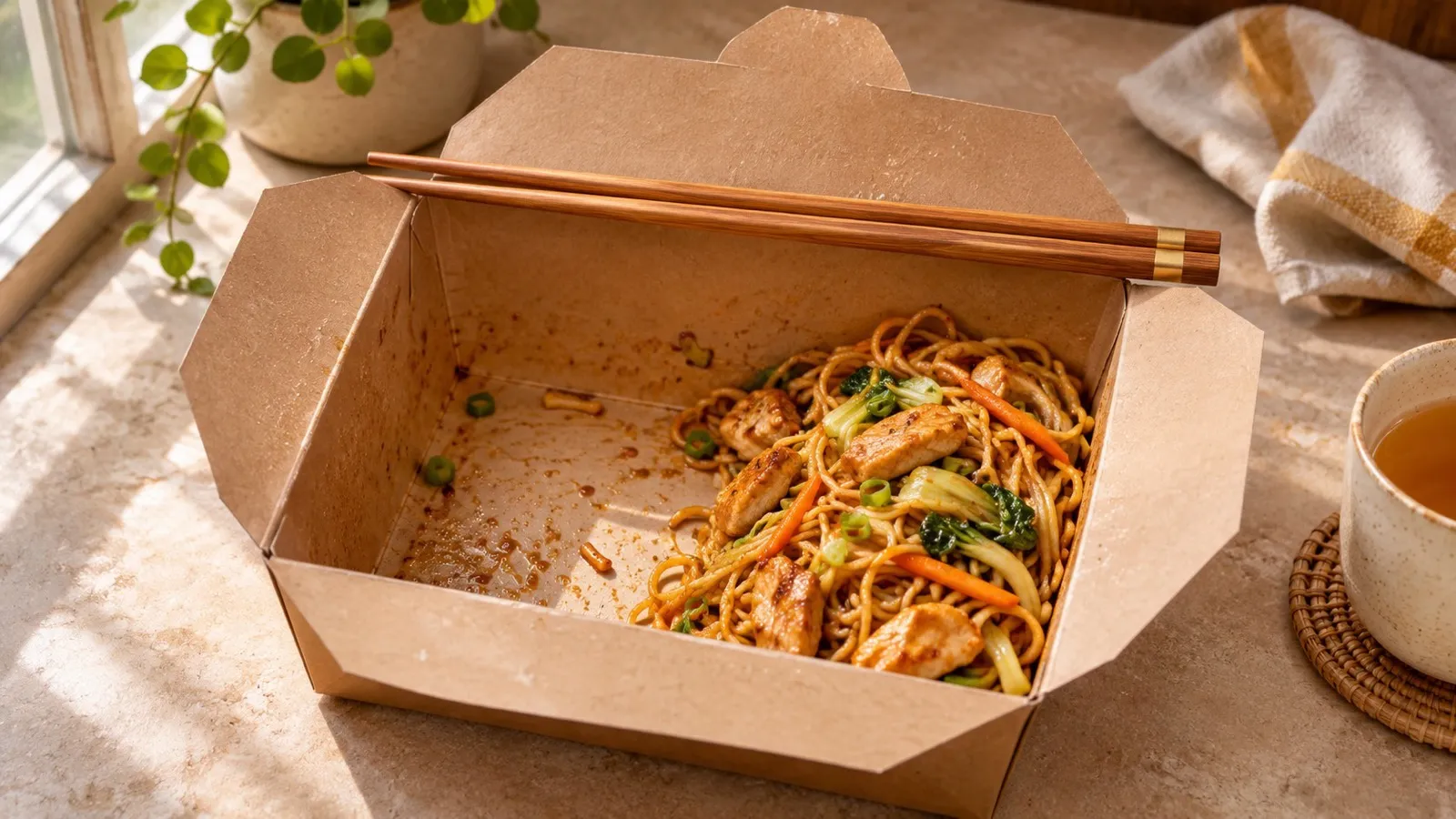
The noodles arrive in a container deep enough to hide the bottom. You eat until the meeting reminder appears, close the lid, and put the box in the office refrigerator. The next day, the same box becomes lunch again. Your diary now has two meals and one restaurant portion, with no neat line showing where the first ended and the second began.
This is a common advantage disguised as a tracking problem. The leftovers give you a second chance to measure the original meal. Instead of guessing both lunches independently, treat them as two shares of one box.
Start with the whole order
If the restaurant publishes nutrition for the item as sold, save that total before dividing it. Check whether sides, sauces, or optional toppings are included. A menu name can cover different configurations, and the number only helps when it describes the box in front of you.
If no restaurant information exists, build a broad estimate from the identifiable components: noodles or rice, protein, vegetables, sauce, and any extras. Use the menu description to identify ingredients hidden under the top layer. The whole-box estimate does not need false precision. Its value is that both lunches will draw from the same consistent reference.
Take a photo before eating. The untouched container shows the starting amount and how the components were distributed. This matters when the first lunch takes mostly protein from the top and the second is mostly noodles from the bottom.
Weigh what remains
The most practical method is to weigh the food left after the first meal. Transfer it to a container with a known empty weight or weigh the takeout box if you can determine its tare. Then compare the remainder with the original food weight.
You may not have weighed the untouched order. You can still learn from the remainder. Weigh the second lunch before eating and use that measurement with a food reference per gram, or compare it with a known restaurant serving weight if one is published. The first lunch becomes the difference between the whole order and the measured remainder.
If only the total nutrition is known, estimate the fraction left visually or by weight. For a reasonably uniform noodle dish, using the remaining share of weight as the remaining share of the total is a workable approach. For a compartmented meal, treat the parts separately.
Composition can change between days
The first forkfuls often take what is easiest to see. Pieces of chicken disappear before the noodles, sauce settles at the bottom, and vegetables may be left for tomorrow. Two halves by weight are not necessarily two nutritionally identical lunches.
Look at what changed. If the remainder is clearly short on protein and heavy on rice, do not split every component fifty-fifty. Estimate how much chicken you ate on day one and how much remained for day two, then divide the shared base more broadly.
For mixed dishes such as chilli, curry, or fried rice, stir before serving if you plan to save part. A more even mixture makes the fraction method stronger and improves the second lunch too. With foods that should not be stirred, a photo after the first meal records the imbalance.
Keep the diary from counting the box twice
Copying yesterday’s entry is convenient, but it can silently assign the full restaurant portion to both days. Instead, create one reference for the whole order and enter fractions or weights for each meal. Name the entries clearly: “takeout noodles, first portion” and “takeout noodles, remainder,” for example.
If the second lunch includes additions, record them separately. A fried egg, extra sauce, or handful of vegetables added at home belongs to day two, not to the original order. The leftovers are the bridge between the meals; they do not make the meals identical.
Likewise, if some food is discarded after the second lunch, the two recorded portions should not automatically add up to the entire box. The missing share was neither lunch. Note it as waste rather than forcing it into one day’s intake.
Food safety is part of the plan
Store leftovers promptly in a suitable refrigerator and reheat them according to reliable food-safety guidance for the food and your location. A nutrition estimate is never a reason to keep a meal that was stored unsafely. When in doubt, discard it.
Label the container with the date so the second lunch does not become an archaeology project. If you transfer the food, add the portion weight while the scale is out. “Tuesday noodles: 310 g” is more useful tomorrow than a clear box that looks vaguely familiar.
A two-lunch routine
When a large order arrives, decide whether you expect to finish it. If not, split the portion before eating. Move tomorrow’s share into a separate container, record its weight, and photograph or note any components that were divided unevenly. This creates a clean boundary while you are still looking at the whole meal.
If you decide midway, weigh or photograph what remains before storing it. Save the restaurant’s published details or your whole-order estimate in the same diary entry. The next day, open that reference instead of starting a new search.
PixNutri’s photo logging guide can help turn both views of the meal into a consistent record. The first image says what arrived. The second says what crossed into tomorrow. Together, they explain why one takeout box became two different lunches.
Sauces packaged separately deserve their own timeline. You might use most of the sauce on day one and none on day two, even if the solid food splits evenly. Keep the cup with the meal, estimate what was used each day, and avoid dividing it automatically with the box. The same applies to garnishes, bread, and side dishes. “Half the order” is only a useful shortcut when the components actually travelled together. Once lunch separates into containers and days, follow each substantial component to the meal where it was eaten.
A second practical check is container weight. Takeout boxes can hold surprising amounts of moisture and vary even when they look identical. If you plan to subtract tare, weigh the clean matching box rather than borrowing a generic number from the internet. Transferring leftovers to a known home container is often simpler and creates a label-friendly portion for tomorrow.
Written by the PixNutri Editorial Team. PixNutri provides general information, not medical advice. Learn how we work: Methodology · Nutrition sources · Editorial policy
Spotted a factual error? Report it to our editorial team. We review every report and update the page if needed.
