
The cake was a sliver, then another sliver
The first piece barely deserves a plate. It is a narrow sliver cut while the coffee is being poured, small enough to feel like a taste rather than...
By PixNutri Editorial Team · Published November 23, 2026 · Last updated November 23, 2026 · 5 min read
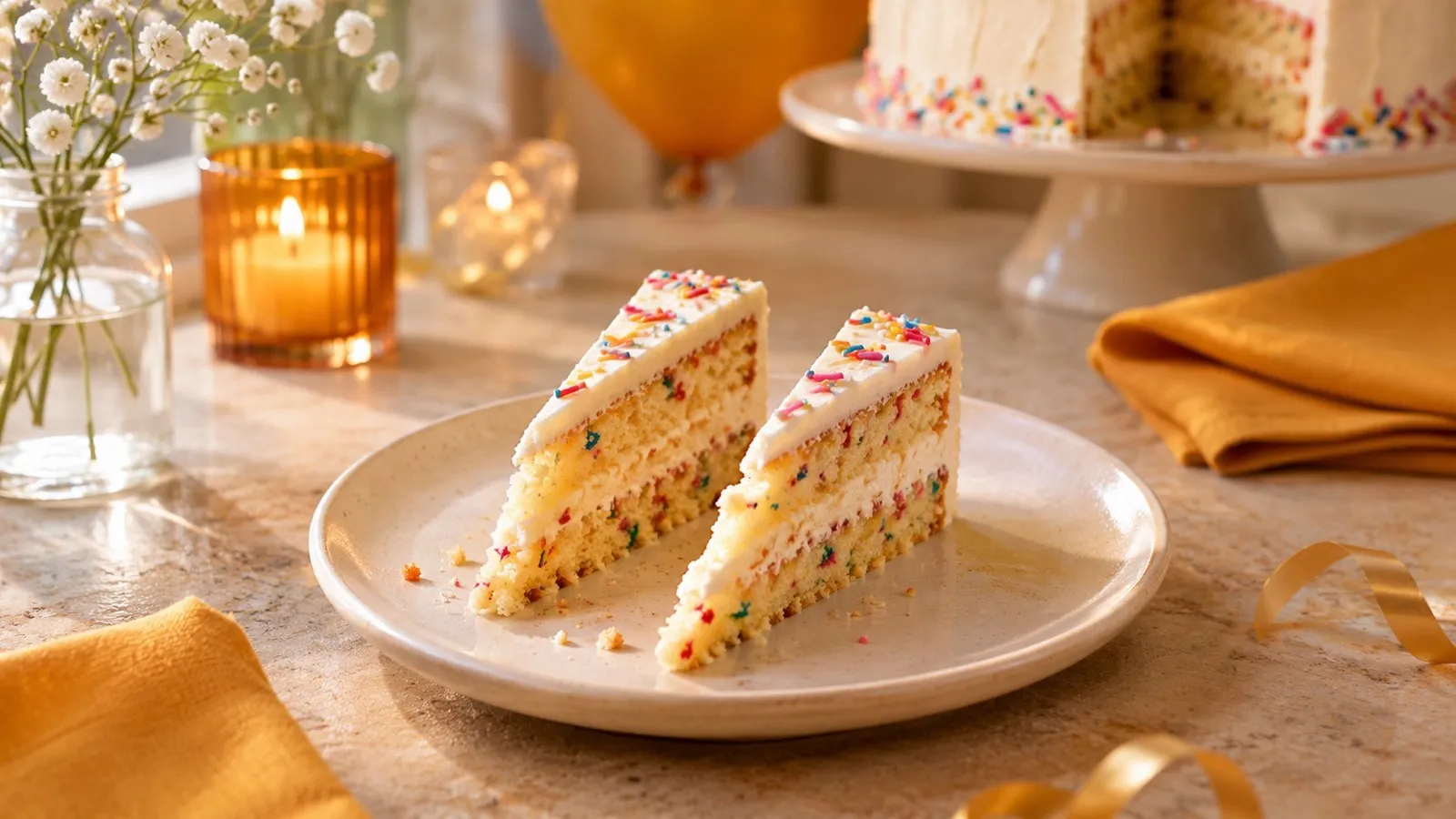
The first piece barely deserves a plate. It is a narrow sliver cut while the coffee is being poured, small enough to feel like a taste rather than dessert. Ten minutes later you trim another sliver from the exposed edge to “make the cake straight.” Later still, a third piece disappears while you wrap what remains.
No single serving looked substantial. Together, they were cake.
This is not a story about willpower. It is a measurement problem created by repeated small portions. Memory stores each moment separately, then the diary asks for one total. The solution is to give the pieces a shared reference before they vanish into different moments.
Count the cutting event, not the intention
Words such as taste, bite, and sliver describe why you took the food more than how much you took. Start with something observable: the number of cuts, the fraction missing from the cake, or the weight change in the whole cake.
At home, the cleanest method is to weigh the cake before the first cut and again when you are finished serving. Keep it on the same plate or board for both measurements. The difference is the amount removed. If several people took pieces, you still need to identify your share, but the total missing amount sets a boundary that memory alone does not.
If you are the only person trimming pieces, the difference can describe your total portion. It does not matter whether you ate it in one sitting or three visits to the kitchen. The scale groups the moments for you.
Use the cake’s own average carefully
For a homemade cake, estimate the recipe total from the ingredients and record the finished cake weight. Your portion’s share of that finished weight can then be applied to the recipe total. This works best when the cake and frosting are distributed evenly.
A sliver from the frosted outer edge may contain more icing than a piece from the middle of a sheet cake. A layered cake can also vary if filling bulges at one side. If the small pieces came from the same edge, the recipe average is still a practical estimate, but recognise what it is averaging.
For a purchased cake with nutrition information, read how the package defines a serving. If it provides grams, compare your combined pieces with that gram amount. If it only shows a fraction such as one twelfth, look at the original cake and estimate what fraction disappeared across all the slivers.
Why small pieces are hard to remember
A plated dessert creates a beginning and an end. You choose it, sit down, and see the empty plate. A sliver taken from the counter has no such boundary. It can become background activity while talking, tidying, or waiting for the kettle.
Make the boundary physical. Put every piece you plan to eat on one plate, even if you cut it in stages. Or leave a small note beside the cake and mark each piece. The aim is not to police the kitchen. It is to preserve a clue long enough for the diary to catch up.
Another option is to enter the first piece immediately and edit the amount if you return. One honest evolving entry is better than three forgotten micro-entries. Label it “cake today” if that helps you find it quickly.
Shared cake needs a different clue
At a celebration, the cake changes shape fast. People take uneven pieces, children leave frosting, and the serving knife carries some of the filling away. Weighing the whole cake is rarely practical. Use the cut plan and visual fraction instead.
Look at the piece in relation to a standard plate and the cake before it was cut. Was it close to the planned serving, half of it, or two narrow pieces that together resembled one? A quick photo of your plate can preserve size without interrupting the event.
If you return for another small piece, compare the two in memory or in the photos. Do not let the word “small” reset the count. Two halves make something close to one planned slice even when they arrived at different times.
The straight-edge illusion
Trimming a cake to make the edge neat feels different from serving dessert because the action is framed as tidying. The food does not know why it was cut. The narrow strip still contains cake and frosting.
The same pattern appears with the end of a loaf, the corner of lasagne, or the broken pieces left in a biscuit packet. If the small fragments matter to your record, gather them into the same mental category as the formal serving. You do not need a separate food entry for “edge correction.” Add them to the portion you already recorded.
This is also where precision can become silly. Crumbs on the knife and frosting left on the cardboard are not worth reconstructing. Focus on pieces you intentionally ate, even if the intention lasted only a second.
Make tomorrow’s leftover easier
Before storing the cake, weigh what remains or mark the container with the remaining weight. If another sliver disappears tomorrow, the new difference gives you a clean estimate. Keep the plate and cover consistent between measurements, or subtract their known weight.
For cakes you make often, save the recipe and finished weight in PixNutri’s recipes. Then an irregular piece can be handled like any other share of a batch. The habit is simple: one cake total, one finished weight, and one combined amount eaten.
The first sliver did not need to become a moral event. It only needed company in the record. When you count the second and third piece with the first, dessert becomes ordinary again: food with a portion, not a series of exceptions.
If several people are trimming the cake, personal weight change will not be recoverable from the whole cake alone. Use your plate, the knife marks, or a quick note for your own pieces. The remaining cake can still set an upper boundary, but it cannot assign every missing gram. This is an important limit: household measurement becomes individual measurement only when you know who took what. When that link is missing, choose a reasonable personal estimate and resist the urge to make the shared total look like private certainty.
Written by the PixNutri Editorial Team. PixNutri provides general information, not medical advice. Learn how we work: Methodology · Nutrition sources · Editorial policy
Spotted a factual error? Report it to our editorial team. We review every report and update the page if needed.
