
The recipe outlived the measuring cup
The handwritten recipe says “one cup of oats.” The cup that once lived in the flour tin disappeared years ago. Your current measuring set is metric, the...
By PixNutri Editorial Team · Published November 23, 2026 · Last updated November 23, 2026 · 5 min read
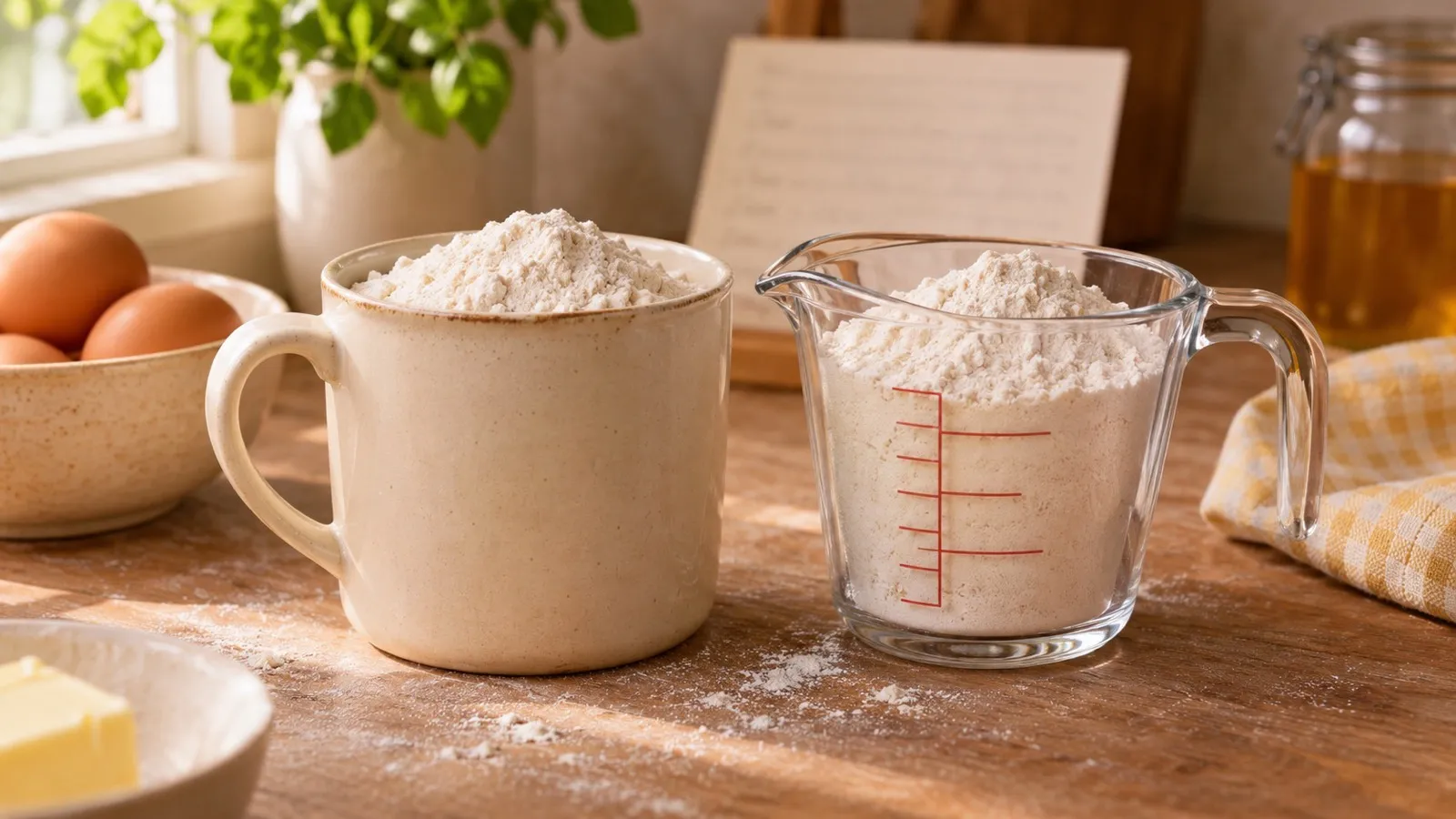
The handwritten recipe says “one cup of oats.” The cup that once lived in the flour tin disappeared years ago. Your current measuring set is metric, the mug beside the kettle is larger than any standard cup, and the person who wrote the recipe is not in the kitchen to explain.
Recipes often survive their tools. A volume instruction remains on the page while the original cup, spoon, scoop, or bowl vanishes. To cook and record the recipe consistently, translate the old measure into something your present kitchen can repeat.
First decide what kind of cup it was
“Cup” can mean a standardized volume measure, a local convention, or an ordinary drinking vessel. Context helps. A published recipe that gives teaspoons, temperatures, and formal instructions probably intends a standard measuring cup for its market. A family note that says “one coffee cup” may refer to a particular household object.
Do not assume US cups, metric cups, and every national cup convention are identical. Check the recipe’s origin and era when that detail could matter. If the source provides gram weights elsewhere, use them to infer its system.
For a forgiving dish such as porridge, a consistent ratio may matter more than the exact historical volume. For baking, where flour and liquid balance shape the result, resolve the unit more carefully before presenting the recipe as reproducible.
Convert the ingredient, not just the container
A cup is volume. Grams are mass. The gram weight of a cup depends on what fills it and how it is filled. A cup of oats does not weigh the same as a cup of flour, honey, or chopped nuts.
Use a reliable weight conversion for the specific ingredient and preparation: rolled oats rather than oat flour, packed brown sugar rather than loose granulated sugar, chopped nuts rather than whole ones. When the recipe itself gives a clue (“lightly packed,” “sifted,” “melted”), keep it.
Better yet, make the recipe once using the most plausible volume measure and weigh each ingredient as you add it. If the result matches the dish you know, save those weights. The next batch no longer depends on the missing cup.
Treat the first recreation as a test, not a fact
An old family recipe may need interpretation. Make a small batch when practical. Observe texture at the stages the recipe describes: pourable batter, soft dough, mixture that coats a spoon. Those sensory clues can confirm or challenge the guessed measure.
Record what you actually used, not what the card said. If you started with a standard cup of oats but added more liquid to reach the familiar consistency, the revised ingredient list is the recipe you cooked. Preserve the original wording in a note if its history matters.
Do not invent a story of exact authenticity. You can say “adapted from the handwritten recipe using a metric cup” or “reconstructed by weight.” Honest provenance is more useful than claiming the missing vessel has been perfectly recovered.
Save weights and the finished batch
Once the recipe works, weigh ingredients directly and record the finished batch weight. This makes future portions easier to estimate and protects the recipe from the next lost utensil.
For a pot of porridge, subtract the pot’s known empty weight from the finished total. For baked food, weigh the cooled result in the pan and subtract the pan, or transfer it to a tared board. Save the number beside the ingredient list.
Now a bowl, slice, or piece can be estimated as a share of the finished batch. The old cup helped create the recipe’s language; it no longer has to govern every serving.
Spoons and handfuls need the same treatment
The problem rarely stops at cups. “One spoon of oil” may mean a tablespoon, serving spoon, or the spoon that happened to live in the drawer. “A glass of milk” and “one bowl of flour” are even more dependent on household objects.
Translate each ambiguous measure according to its role. For a pinch of spice, exact mass may be unnecessary. For oil, flour, sugar, or another substantial ingredient, weigh the amount you decide to use and save it. Prioritize the measures that meaningfully affect both the recipe and its nutrition estimate.
If the recipe says “flour as needed,” record the bowl before and after adding flour or weigh the flour container. The difference reveals how much this batch needed, even if the next batch varies slightly.
Update the recipe without erasing it
Create a clean working version with grams, current instructions, and the finished yield. Keep a photo or transcription of the original note. This respects the recipe’s history while making the present version cookable.
Add a date and version note when you change ingredients. “Version tested with rolled oats and 250 mL metric cup” is meaningful. “Fixed recipe” is less helpful because it hides what was fixed.
If several family members cook it differently, save their versions separately rather than forcing them into one authoritative formula. The variations may be part of the recipe’s real life.
One afternoon can preserve years of cooking
Choose one recipe whose instructions depend on a missing object. Gather a scale, current measuring tools, and the ingredient package labels. Cook it, record every amount actually used, and note the finished weight and sensory cues.
Save the tested version in PixNutri’s recipe collection. The process does more than improve a diary entry. It gives the recipe a new set of legs. The next cook will not need the old cup, only the knowledge it once carried.
Photograph the successful result as well as the old card. The height of a loaf, spread of a biscuit, or thickness of a sauce gives the next cook a target that numbers alone cannot. If a later batch behaves differently, compare ingredients, method, and appearance before changing the conversion.
Package changes can also affect a revived recipe. Flour milled differently, a new baking powder, or a different size of egg can shift texture even when the weights match. Record the important product details for sensitive recipes and keep the conversion as a tested version, not an eternal law.
Most of all, write the method that the card assumed everyone knew: pan size, resting time, mixing order, and doneness cue. The missing cup may be the obvious gap, but silent technique often carries just as much family knowledge.
Written by the PixNutri Editorial Team. PixNutri provides general information, not medical advice. Learn how we work: Methodology · Nutrition sources · Editorial policy
Spotted a factual error? Report it to our editorial team. We review every report and update the page if needed.
