
The last bowl of soup was mostly potatoes
At lunch, you lift the lid, dip the ladle into the pot and come up with broth. There are a few carrots in it and a piece of potato. You’re eating between...
By PixNutri Editorial Team · Published November 23, 2026 · Last updated November 23, 2026 · 5 min read
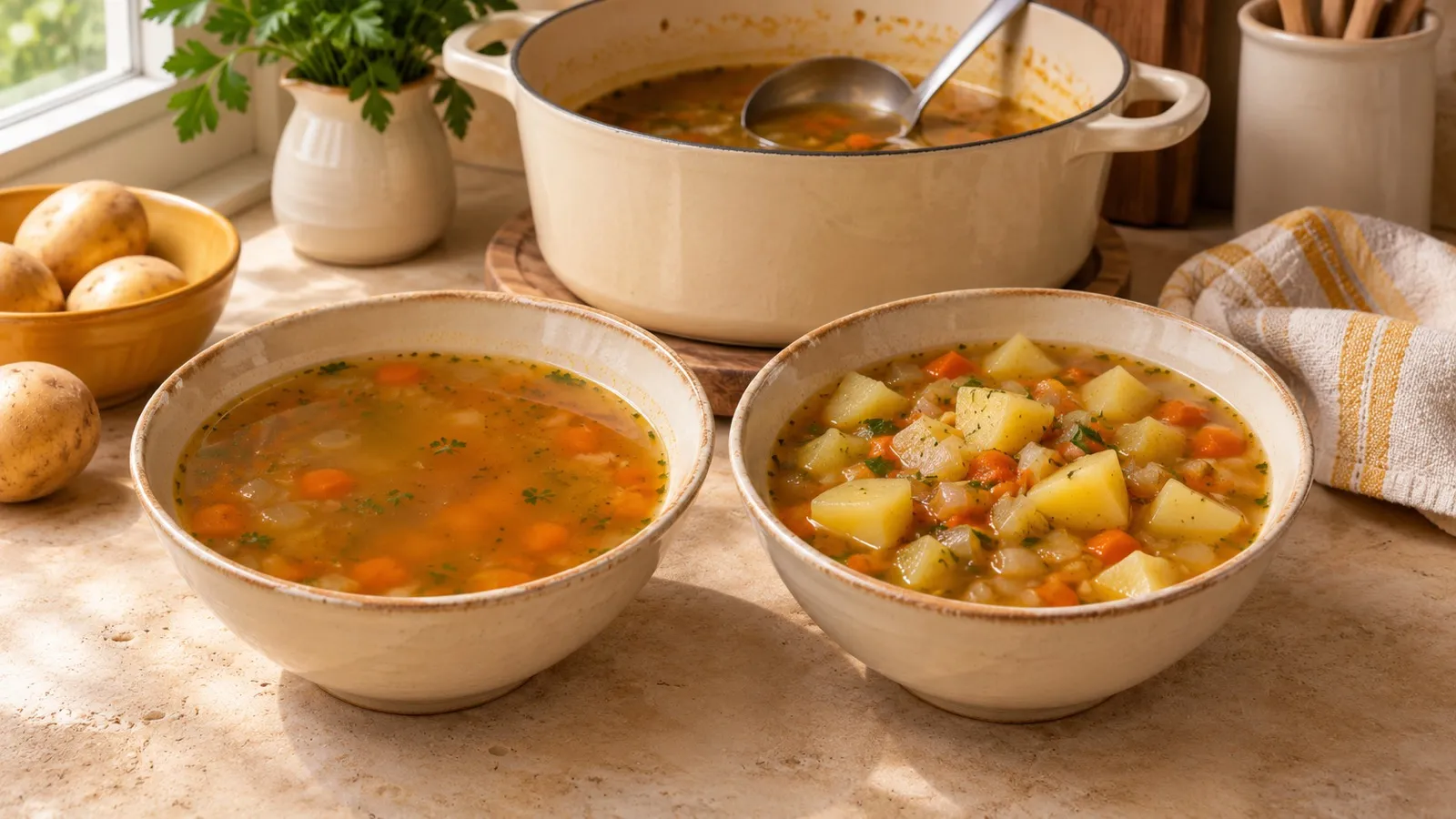
At lunch, you lift the lid, dip the ladle into the pot and come up with broth. There are a few carrots in it and a piece of potato. You’re eating between calls. You put the lid back, carry the bowl over to the table and get on with lunch.
At dinner, the ladle makes a different sound. It catches on the bottom. When you lift it, you’ve got so many potatoes that there’s hardly room left for broth.
Both bowls came from the same pot. If you weighed them at the table, they might even come to the same number. For the first bowl, the weight came mostly from liquid. For the second, plenty of it came from potatoes.
That’s an ordinary thing to happen in a kitchen. It also explains why a perfectly sensible way of recording a homemade meal can give you an awkward answer.
What the number from the pot can tell you
Say you made a soup, looked up the ingredients and estimated the nutrition for the whole recipe. When it finished cooking, you weighed the food without the pot. You now have a recipe total and a cooked weight.
If the whole batch weighed 1,600 grams, a 400-gram portion is a quarter by weight. When a portion is reasonably representative of the batch, you can use that fraction to estimate its share of the nutrition. In a smooth blended soup, a quarter of the pot by weight is a sensible starting point. The same idea works for a thick soup that’s been stirred and has small pieces distributed throughout.
The catch comes when the ladle serves up a bowl that looks different from the pot as a whole. Four hundred grams of almost clear broth is still 400 grams. You need a different piece of information to tell how much potato came out with it.
One way to see it is to put two bowls on the counter. Add two chunks of potato to the first and six to the second. Pour broth into each until they weigh the same. You’ve made two equal weights from the same ingredients. The bowls still have different proportions, and you can see why before you look at a single entry in your diary.
Decide how you’ll serve it while there’s still a choice
At home, I’d start with the serving spoon. For soup with small pieces, give the pot a gentle stir and take a ladleful that reaches down into the solids. At the next bowl, do the same. You can still use the batch average, and you’ve made the portions more like the batch the estimate came from.
If the pot has a few big pieces of chicken, that’s a different dinner. Put a piece of chicken into each bowl, then add the soup around it. If you’re recording the chicken separately, leave it out of the weight and ingredient total you’re using for the rest of the batch. Otherwise you’ll be counting it twice.
The distinction is especially handy when someone wants another helping. “More soup” can mean a little extra broth or another serving spoon full of potatoes. If you already know what you put in, describe that. You don’t need to rebuild the first bowl from scratch.
Leftovers can use the same treatment. If you want tomorrow’s lunch to resemble today’s, set aside some solids and broth before the pot starts to empty. If tomorrow’s bowl is deliberately potato-heavy because you like it that way, you’ve already got the detail you need for a note.
What I’d do with the bowl that’s already on the table
Imagine you’re reading this after serving dinner. There’s no batch weight, the pot is nearly empty and you know you’ve got the potato bowl.
You can take the closest soup entry you have and record the serving as an estimate. If you want the entry to say something useful later, add a few words: “last bowl, mostly potato.” That’s information the recipe average couldn’t give you. It takes less time than searching for a different soup with a name that sounds closer.
If you know the dish well and the solids are easy to separate, you can also record the main component and estimate the rest using a reference that excludes that component. This is worth considering when it’s easy to do. A soup with diced vegetables and tiny bits of meat is probably a poor candidate for picking apart on a weeknight. A whole chicken thigh you lifted out with tongs is easier.
What helps is deciding how much detail you want before you start. If you’re trying to repeat a recipe, record the ingredients and finished yield once. If you’re only trying to remember what you had on a busy Wednesday, a short description and a rough portion can be enough.
Give the second cook a useful note
The person serving tomorrow may have had nothing to do with the cooking. A label that says “vegetable soup” will help them find lunch, but it gives them no way to know what happened to the recipe after it went into the fridge. If you split the batch on purpose, write down what you did. “Two bowls, roughly even” is useful. So is “all the potatoes went into the large container.”
I’d keep that note with the batch weight if it’s a recipe I expect to make again. Then I can see whether today’s odd portion was a fluke caused by the way we served it, or the way this soup always settles. That’s more useful than adding a new entry called “potato soup” to describe something that started as chicken and vegetable soup.
One small check before you put the lid back
The next time you’re serving from a pot, look at the first scoop and the last scoop. If both look like the same soup, the batch average has a decent chance of describing both bowls. If the first is almost all liquid and the last is mostly solids, you’ve found the limit of the shortcut.
I’d make that observation first, while the food is still in front of me. Then I’d decide whether to stir, portion one ingredient separately, or keep the result as a rough entry. The scale comes after that decision. It’s very good at telling you what a bowl weighs.
You can try the method on something from PixNutri’s recipe collection. Start with a recipe that gives ingredient weights, write down the cooked yield and see how you naturally divide the pot. The first useful thing you might learn is how your own ladle serves dinner.
Written by the PixNutri Editorial Team. PixNutri provides general information, not medical advice. Learn how we work: Methodology · Nutrition sources · Editorial policy
Spotted a factual error? Report it to our editorial team. We review every report and update the page if needed.
