
The bag said spinach. The recipe said a handful.
The recipe tells you to add a handful of spinach. You reach into the bag and pull out a loose cloud of leaves. Someone with larger hands could lift twice...
By PixNutri Editorial Team · Published November 23, 2026 · Last updated November 23, 2026 · 5 min read
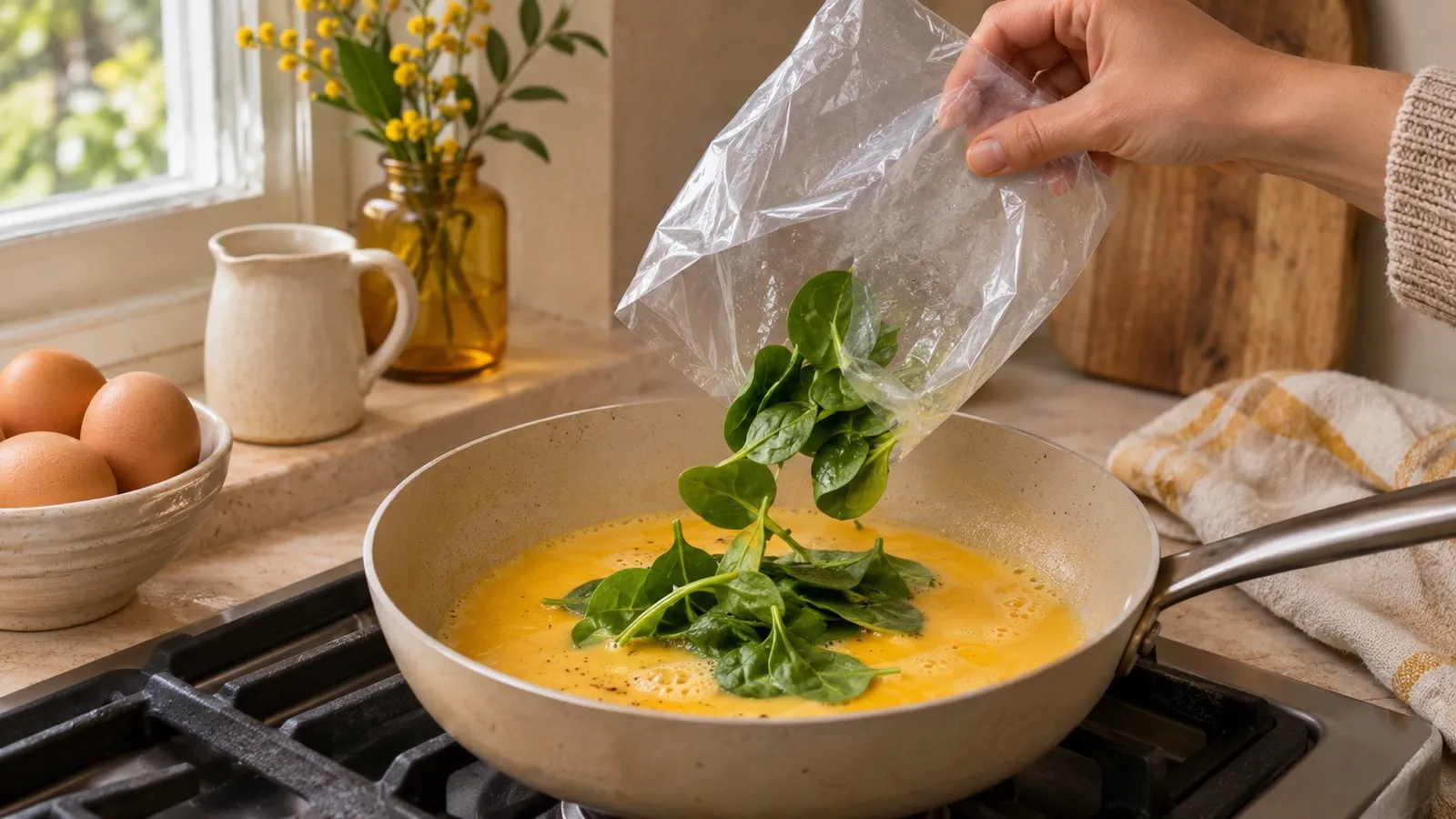
The recipe tells you to add a handful of spinach. You reach into the bag and pull out a loose cloud of leaves. Someone with larger hands could lift twice as much. Wet spinach clings together. Baby leaves pack differently from mature ones. The instruction is easy to cook and difficult to repeat.
A handful is a gesture, not a standardized measure. For a forgiving dish, that may be exactly what the recipe intended. For a recipe you want to record or share, translate the gesture into the amount you actually used.
Weigh the handful once
Put the mixing bowl or pan on the scale, zero it, and add your normal handful. Record the grams before the spinach wilts. If the recipe calls for several handfuls, add them one at a time and observe the range.
Do not change how you grab the leaves to make the result tidy. The purpose is to measure your habit. A loose handful and a compressed handful are different portions, and the scale will show that.
Once you know the weight used in a successful batch, save it in the recipe. Next time, you can weigh the spinach or use the familiar visual amount. The old instruction can remain as a sensory cue: “about one loose handful, approximately the tested weight.”
Raw and cooked spinach are different states
Spinach loses a large amount of volume when heated because water leaves and the leaves collapse. A pan that begins full can end with a small mound. Match the quantity and reference to the state you measured.
If you weigh raw spinach before cooking, use a raw spinach reference and keep that ingredient amount in the recipe. If you weigh the finished cooked spinach, use a cooked reference that matches the preparation, including any oil or butter separately.
Do not infer the raw weight from the final volume by appearance alone. Cooking time, draining, and squeezing change the result. The easiest moment to measure is when the leaves leave the bag.
The bag gives an upper boundary
Check the package weight. If a 200-gram bag was full before cooking and half remains, roughly half the bag entered the dish, subject to any leaves used elsewhere or discarded. This is a useful reconstruction when the scale was not involved.
The bag’s serving suggestion may define cups or grams. Read whether it refers to raw leaves. A serving definition can help estimate your handful, but it does not prove your hand matched it.
If the bag contains washed spinach with water clinging to the leaves, the measured weight includes that moisture. Drain or dry it consistently when repeatability matters. For everyday cooking, the small variation may be less important than recording whether you used half the bag or nearly all of it.
Handfuls work differently for dense foods
A handful of spinach is mostly air between leaves. A handful of nuts, granola, or dried fruit is dense and may contribute a substantial amount in a small volume. The vaguer the measure and the denser the food, the more useful a quick weight becomes.
This is why recipe language should match the ingredient’s role. “A handful of herbs” may signal flexible seasoning. “A handful of cashews” in a sauce affects texture, yield, and nutrition enough to deserve a weight in a reproducible version.
Keep the conversational measure if it helps the cook visualize the step, but pair it with grams after testing. The two forms serve different purposes.
Recipe development can preserve flexibility
Some cooks worry that weighing a handful removes the intuition from cooking. It does not have to. Record a target range rather than one rigid number: enough spinach to fill the pan loosely, within the range observed in successful batches.
Explain what the ingredient should do. Is the spinach a garnish, a major vegetable component, or something that wilts into a sauce? A reader can adjust based on the pan and appetite while understanding the tested baseline.
For substitutions, record the new ingredient separately. Kale, frozen spinach, and mature spinach do not behave exactly like fresh baby spinach. The same handful wording should not erase the change in water, texture, or preparation.
Reconstruct the handful after dinner
If the spinach bag remains, weigh it and compare with the labelled starting amount. Check whether any leaves were discarded or used in another meal. If the bag is gone, recall how full it was and how many handfuls you added. Keep the estimate broad.
In a mixed dish, trying to weigh cooked spinach after serving is usually less helpful because it is tangled with other ingredients. Reconstruct from the package and cooking step instead.
If spinach was only a minor flexible ingredient, accept the rough estimate and focus on larger uncertain components. Measurement effort should follow the questions you care about.
Give the next cook both languages
Update the recipe to say something like “one loose handful of spinach, weighed in the tested batch,” followed by the real weight you observed. Record whether it was raw, washed, and added before cooking. Save the finished version in PixNutri’s recipes.
The bag named the ingredient. Your hand delivered the portion. The scale can translate between them without taking the life out of the recipe.
Frozen spinach needs a different instruction. It is usually compact, may include ice, and can be sold in blocks or portions. “A handful” no longer maps to the airy raw-leaf gesture. Use the package weight, weigh the frozen amount, and record whether the recipe expects it thawed and squeezed. Water removed during thawing changes the finished weight.
Pre-washed bags can contain stems or damaged leaves you discard. If the difference is meaningful, weigh what actually enters the pan rather than relying on the nominal bag total. The label describes the product sold; the scale describes the ingredient used.
For a salad, the handful may remain visible and easy to compare with the bowl. For soup or sauce, it disappears into the dish. Capture the amount at the bag because the finished meal will not let you separate it again.
Garden spinach creates a different starting point because no package gives the total. Place the harvest bowl on the scale, zero it, and weigh the cleaned edible leaves after removing soil and damaged parts. This gives the recipe the ingredient that actually entered the kitchen, not the plant material carried inside.
If several handfuls are added over time as leaves wilt, keep the bowl on the scale and watch the cumulative change. The pan may seem to “make room” for more, but the recipe should remember every addition. A running weight handles the sequence without asking you to count fleeting handfuls.
Written by the PixNutri Editorial Team. PixNutri provides general information, not medical advice. Learn how we work: Methodology · Nutrition sources · Editorial policy
Spotted a factual error? Report it to our editorial team. We review every report and update the page if needed.
