
The heel of the loaf was still one slice
The end of the loaf has been sitting on the cutting board since yesterday. Everyone has been cutting around it, taking the soft slices from the middle and...
By PixNutri Editorial Team · Published November 23, 2026 · Last updated November 23, 2026 · 5 min read
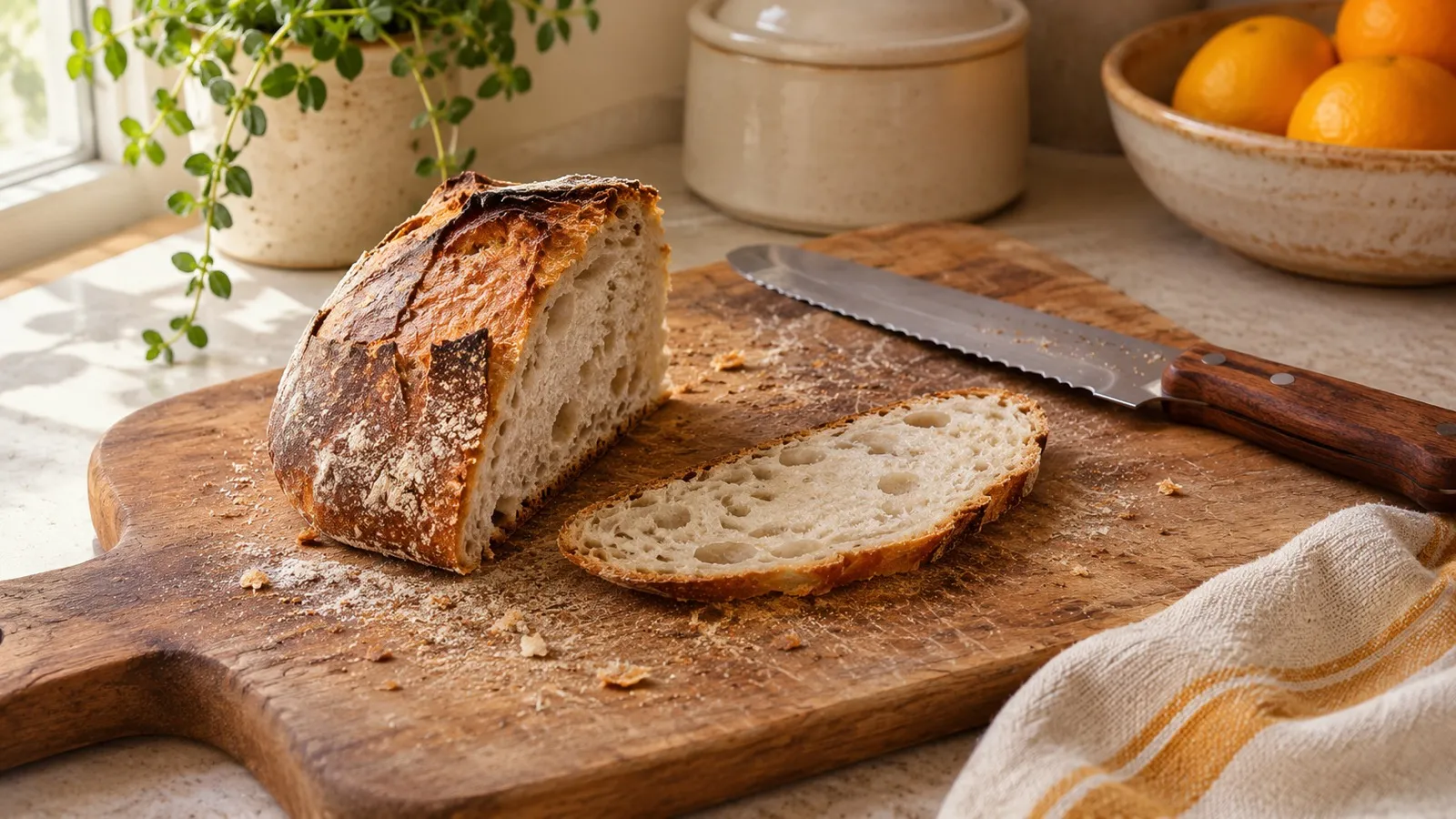
The end of the loaf has been sitting on the cutting board since yesterday. Everyone has been cutting around it, taking the soft slices from the middle and putting the heel back against the exposed bread. This morning it’s all that’s left.
You put it in the toaster and open your food diary. Yesterday’s breakfast is there. One slice of bread, butter and an egg. You could copy the whole thing in a few seconds. You’re about to do exactly that when the heel gets stuck halfway into the toaster slot.
It’s still one piece of bread. It’s also thick enough that you have to fish it out and finish it under the grill. “One slice” has done a fine job of describing how many pieces you took. It has told you very little about how much bread went with breakfast.
Find out what your usual slice weighs
The next time you cut from the same loaf, put one ordinary slice on the scale. Cut it the way you normally would when you’re making breakfast. There’s no point squeezing a thin slice out of the bread just so it resembles a serving on the packaging. What you want is a reference for your own knife, your own loaf and the way you actually eat it.
Suppose an ordinary slice weighs 36 grams. Then suppose the heel weighs 62 grams. If the bread is listed at 250 calories per 100 grams, that works out to about 90 for the first piece and 155 for the heel. Those are illustrative figures. A different loaf will have different values, and your favourite piece might even weigh less than the average slice.
The arithmetic is the easy part. The real shortcut is that you now have a weight for a familiar piece of bread. Tomorrow, if you cut another ordinary slice from the same kind of loaf, you can reuse the estimate. The unusual piece is where weighing again tells you something you didn’t already know.
Thickness can help you decide when to check, but it won’t settle the weight by itself. A wide slice from the middle of a round loaf may outweigh a thicker piece cut near the end. Air pockets make a visual comparison harder too. If you cut two pieces that look about the same and the scale disagrees, trust the scale for the weight and keep the same reference for the bread.
The slice on a label has a weight attached
There’s another place where “one slice” can cause trouble. You buy a packaged loaf and the nutrition label gives figures for a serving. Look for how the label defines that serving. On a US Nutrition Facts label, a familiar measure such as a slice can appear alongside its weight in grams. A serving can also be more than one slice. FDA guide to serving sizes on nutrition labels
Imagine a label gives 140 calories for two slices weighing 56 grams together. If you take two ordinary slices that match the package estimate, you can use the serving listed on the label. If you cut a 42-gram piece from an unsliced loaf with those same nutrition values, calculate 42 divided by 56, then multiply by 140. That comes to 105 in the example.
Where this gets messy is when you switch from one kind of bread to another and keep the same diary entry. You might have measured the slice correctly and still be using the values for last week’s loaf. If the bread changed, check the new label. If the bread stayed the same and the cut changed, only the quantity needs attention.
Take that distinction back to the toaster. Today’s problem is a thick end piece from yesterday’s bread. There’s no need to search for a special entry called “bread heel.” Use the bread you already know and change how much of it you entered.
Bakery bread and homemade bread
A bakery loaf often comes in a paper bag with a sticker that tells you the name but gives you no nutrition information. The scale can still tell you a lot about the portion. It can’t tell you what went into the dough. Start with a comparable bread if you want to record it. Look for a reference that matches the loaf reasonably well, especially if it contains ingredients such as seeds, nuts or dried fruit that you can see on the cut surface.
For bread you made yourself, you can estimate the whole recipe from the ingredients you actually used, then divide that total by the cooled loaf’s weight. If you baked two loaves from one dough, keep track of the batch you used for the calculation. Weighing one finished loaf and assigning it all the ingredients for two would make every slice look larger in the diary than it was.
The cooled weight is useful because bread loses water during baking and cooling. The starting dough and the finished bread are two different things to put on the scale. If you want to estimate a slice by its share of the baked loaf, weigh the finished loaf before you cut it. Write that figure beside the recipe so you don’t have to reconstruct it after half the bread has disappeared.
Butter, jam or whatever goes on the toast is a separate part of breakfast. If you’re weighing the bread, get that reading first. Otherwise, the number on the scale includes the topping while the bread entry you’re using describes bread alone.
Try it on the next loaf
You don’t have to measure every piece from breakfast. Try two that you would normally both call “one slice.” The first can be an ordinary piece from the middle. The second can be the heel, a narrow piece from a round loaf or the thick one you cut while someone was talking to you. Write down both weights, then look at the difference.
If they’re close, you’ve learned that your usual estimate works fairly well for that loaf. If they’re far apart, you’ve found the particular breakfast worth treating differently. Either answer is useful because it comes from your kitchen instead of a guess about what somebody else calls a slice.
Apply the same check to other foods you enter by piece with PixNutri’s food logging guide. Start with the one that keeps surprising you. For this loaf, the clue was that the last piece wouldn’t fit into the toaster.
Sources
Written by the PixNutri Editorial Team. PixNutri provides general information, not medical advice. Learn how we work: Methodology · Nutrition sources · Editorial policy
Spotted a factual error? Report it to our editorial team. We review every report and update the page if needed.
