
The rice was weighed cooked. The entry said dry.
The bowl on the scale reads 180 grams. You search for rice, choose a result that looks official, and enter 180. The number that appears seems too high for...
By PixNutri Editorial Team · Published November 23, 2026 · Last updated November 23, 2026 · 5 min read
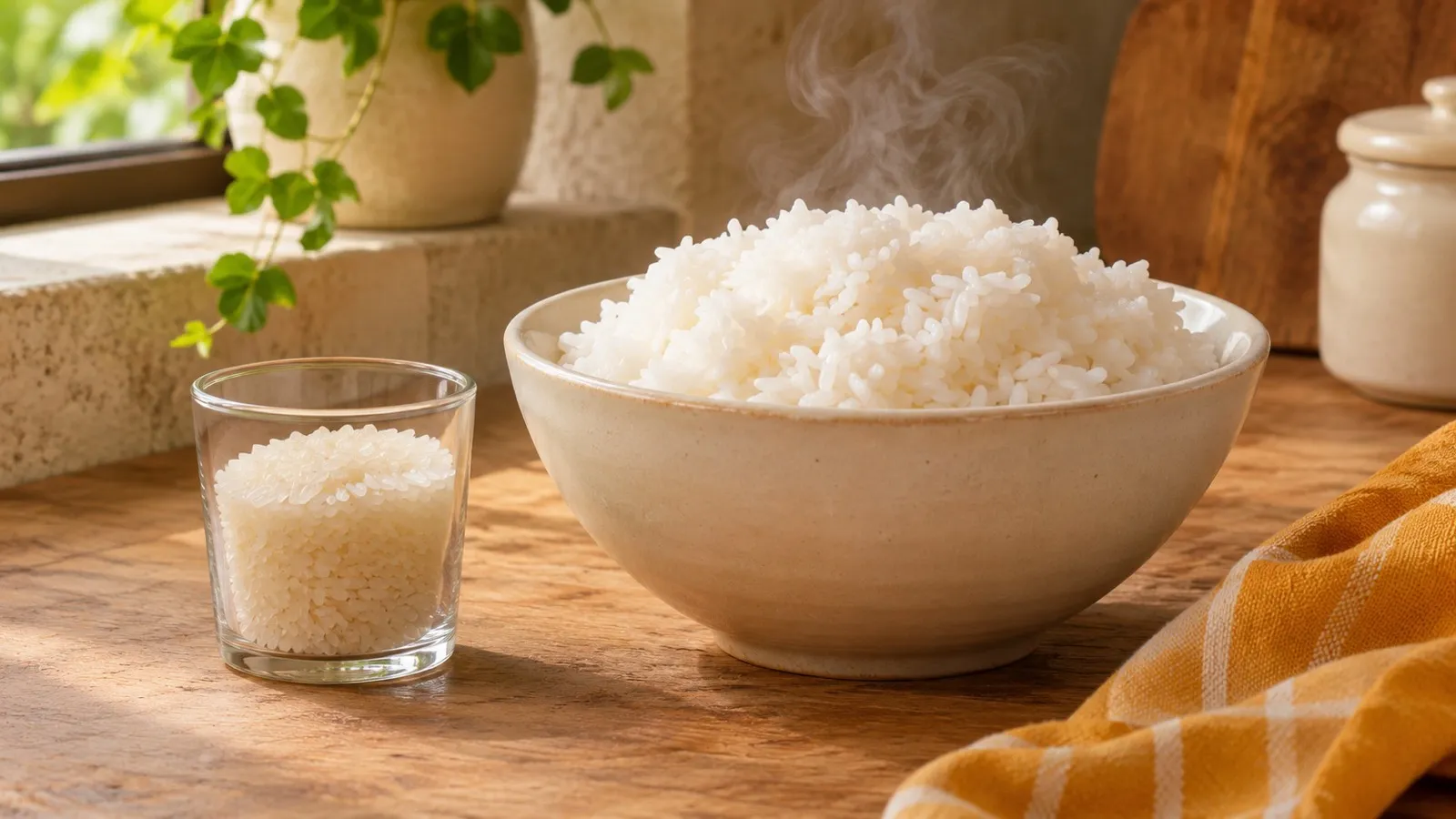
The bowl on the scale reads 180 grams. You search for rice, choose a result that looks official, and enter 180. The number that appears seems too high for the portion on the plate. Then you notice one quiet word in the food name: dry.
The scale measured cooked rice. The reference described uncooked grains. Both weights are valid, but they belong to different stages of the food.
Water changes weight, not the original grain
Rice absorbs water during cooking. The finished pot weighs more than the dry rice you started with because it now contains that water. The amount absorbed depends on the variety, cooking method, ratio of water, draining, resting time, and how much steam escaped.
That is why a universal conversion between dry and cooked rice is weaker than measuring your own batch. A cup of dry rice does not always produce the same cooked weight in every kitchen. Even two batches from the same bag can differ if one simmers longer or rests uncovered.
Match the reference to the state on the scale. If you weigh cooked rice, use nutrition information for cooked rice. If your recipe calculation begins with dry rice, keep the dry weight and distribute the batch after cooking.
The batch method connects the two states
Weigh the dry rice before cooking and record the nutrition for that amount. After cooking, weigh the finished rice without the pot. The ratio between your portion and the finished batch tells you the share of the original dry rice.
For example, if you cooked a recorded amount of dry rice and your serving represents one quarter of the finished cooked weight, assign about one quarter of the dry-rice total to the serving. The exact numbers should come from your bag, your scale, and your finished pot.
This method avoids needing a generic cooked conversion. It also handles the water in your batch automatically because the water changes the denominator (the finished weight) without adding energy to the rice.
Stir or fluff the rice before portioning so moisture and grains are distributed reasonably evenly. If the bottom is dry and the top is wet, equal cooked weights may not represent identical shares, though the batch method remains a practical estimate.
Read every word in a database result
Food databases may distinguish white or brown rice, long-grain or short-grain, enriched or unenriched, cooked or dry. Some entries describe rice prepared with salt or fat. The first matching noun is not enough.
Check the description, serving unit, and value basis. An entry per 100 grams dry should not receive the weight of a cooked bowl. An entry per cup cooked should not receive a dry measuring-cup volume. Choose the result that matches both the food and the state you measured.
If a package lists nutrition for dry rice, that is often the strongest reference for the product you bought. Use the batch method to carry it into cooked portions. If the package provides an “as prepared” column, read the preparation assumptions before using it.
Cooking additions belong to the finished batch
Water may not add calories, but oil, butter, coconut milk, stock ingredients, and sauces can. Record them with the batch. If oil remains in the pan or some cooking liquid is drained away, the recipe calculation becomes an estimate; note the preparation and avoid pretending every added gram was necessarily consumed.
For plain rice cooked in water, the state mismatch is usually the main issue. For pilaf, risotto, or seasoned rice, a generic cooked-rice entry misses the additions. Build a recipe from what you used and record the finished weight.
If you mix rice with vegetables or protein after cooking, decide whether to weigh the rice before mixing or calculate the whole dish as a new batch. Either approach can work if the entries and weights describe the same stage.
Leftovers can lose water again
Cooked rice may dry slightly in the refrigerator or gain moisture when reheated. The same portion can weigh differently across days without a change in the amount of original grain. For ordinary tracking, using the cooked-batch reference is still practical, especially when the change is small.
If you want consistency, portion the rice soon after cooking and label the containers. Each portion then represents a recorded share of the original batch. Reheating changes texture and moisture but does not require you to recalculate the dry grain.
When combining leftover rice with new ingredients, keep the recorded rice portion and add the new ingredients separately.
Rescue an entry after the meal
If you already entered cooked weight into a dry reference, do not guess a conversion from the alarming total. Replace the food entry with a comparable cooked-rice reference, or reconstruct the batch from the dry amount you cooked and the share you ate.
The rice bag, remaining pot, and recipe can help. If you know how much dry rice went into the cooker and how many comparable portions came out, use that information. If not, choose a standard cooked reference and accept a sensible estimate.
Avoid “correcting” the number just because another value looks more plausible. Correct the mismatch in state. The resulting number can then stand on evidence rather than expectation.
Put the state in the recipe name
Save entries with explicit names: “basmati rice, cooked in water” or “dry jasmine rice for batch.” That one word prevents the same mistake next week. For homemade dishes, record dry ingredients and the finished cooked weight in PixNutri’s recipes.
The scale did its job. It told you that the bowl held 180 grams of the food placed on it. The remaining task was linguistic: choose an entry that described the same food at the same moment.
Drained rice deserves a note of its own. Some cooking methods use excess water that is poured away, while absorption methods keep nearly all the measured water in the pot until steam escapes. The same dry amount can therefore produce different cooked weights. That is another reason to use the finished batch from your method rather than borrowing a yield from a different kitchen.
Mixed grain dishes need separate handling. If you cooked rice with lentils, peas, or noodles, a plain cooked-rice reference cannot describe the finished spoonful. Record the dry ingredients and additions as a recipe, then weigh the combined cooked batch. The scale reading remains useful once the entry describes what was actually mixed into the bowl.
Written by the PixNutri Editorial Team. PixNutri provides general information, not medical advice. Learn how we work: Methodology · Nutrition sources · Editorial policy
Spotted a factual error? Report it to our editorial team. We review every report and update the page if needed.
