
Half the dinner was still on the plate
You take the picture while dinner is hot. There’s chicken on one side of the plate, a mound of rice on the other, and a few pieces of broccoli balanced...
By PixNutri Editorial Team · Published November 23, 2026 · Last updated November 23, 2026 · 5 min read
You take the picture while dinner is hot. There’s chicken on one side of the plate, a mound of rice on the other, and a few pieces of broccoli balanced against the rim. It’s a useful picture. You can see what you served yourself and which parts belong in the meal.
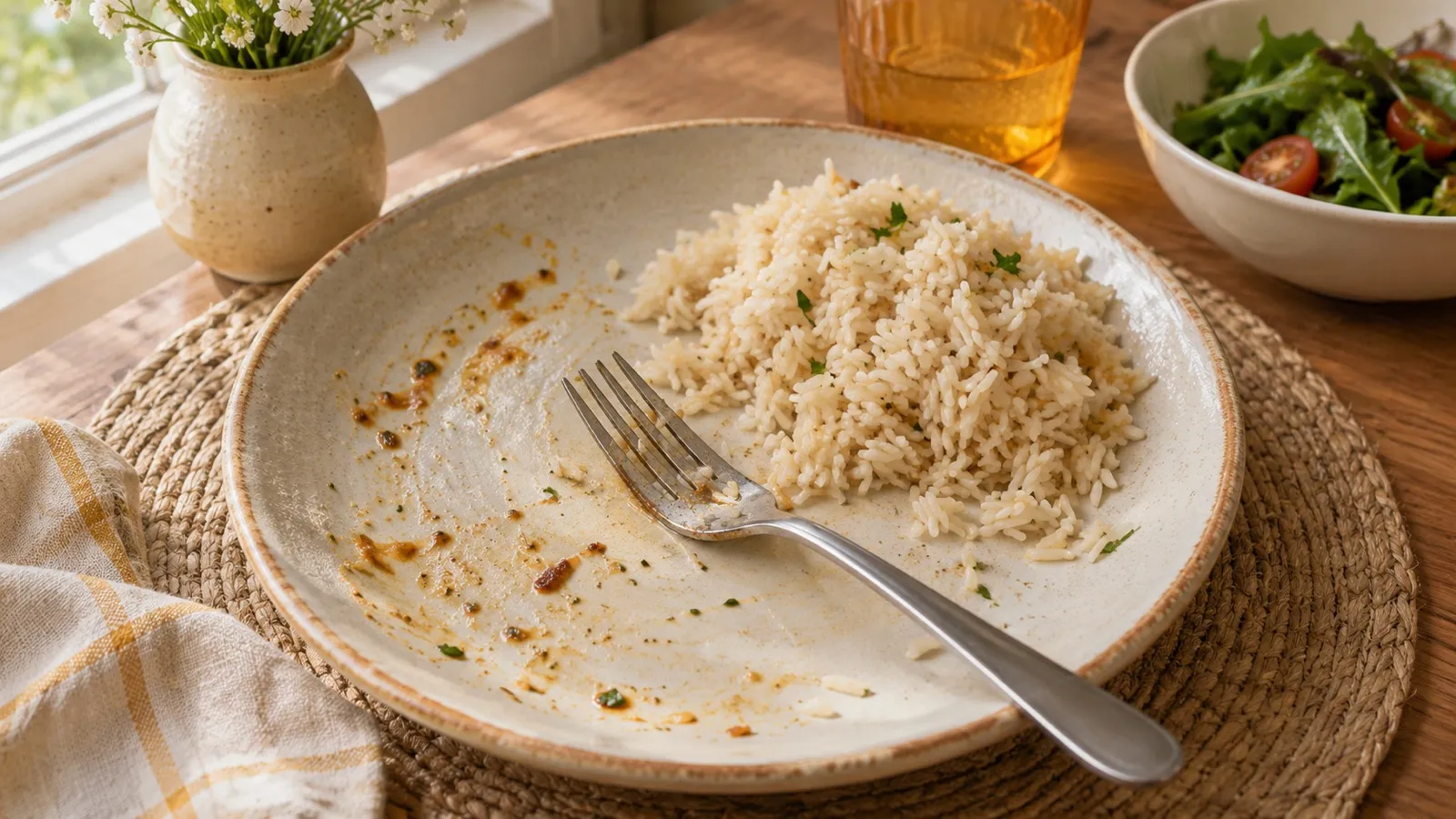
Then you eat the chicken, finish the broccoli and leave a good share of the rice. You take the plate to the sink. When you open the photo later, it’s still a picture of dinner before anything happened to it.
If you use that photo to start a diary entry, there’s a natural question to ask before you save. Which part of dinner made it back to the kitchen?
Change the rice entry first
Suppose you know how much rice you put on the plate because you weighed out a portion while cooking. In this example you served 180 grams and left 60 grams. If those readings both refer to cooked rice and exclude the plate, you ate about 120 grams. The chicken and broccoli entries can stay as they are if you finished them.
If the photo suggested 200 grams of rice and you never weighed the original serving, subtracting a measured remainder from that estimate gives you a rough answer. The scale has made one part of the calculation clearer. There’s still uncertainty about what went on the plate at the beginning. You can make that distinction in the diary with a short note, especially if you plan to look back at the meal another day.
The easiest opportunity to make the correction is at the sink. If the portion matters to your record and the rice is easy to pick up, use a small bowl and zero the scale. If you already know you left about a third of the mound you served, adjusting the entry approximately can be enough. The aim is to describe what happened while you still have the clues in front of you.
Why the whole plate is a poor shortcut here
Imagine the food on the plate weighed 400 grams before dinner. The only thing left is 100 grams of rice. You ate three quarters of the food by total weight. If you take a quarter off every entry, however, you’d end up recording less chicken and broccoli than you actually ate. The weight you left had a name. Use it.
There are meals where the remaining fraction works better. Imagine you serve yourself a bowl of plain yogurt, eat some and leave the rest. If you know the original weight and the weight left in the bowl, the difference describes how much yogurt you ate. A well-mixed dish can sometimes work the same way. If you’ve eaten the filling from a sandwich and left a thick edge of bread, you’re back to a meal whose components didn’t disappear evenly.
You can usually tell which case you have by looking. If there’s a pile of one thing, adjust that thing. If you have an even remainder from food that was well mixed, the remaining weight can help with the whole serving. If dinner is a jumble of partly eaten components, a broad estimate may be the best the plate can give you.
What to do with food you never meant to eat
A photo of dinner can include things that were on the plate for a reason other than eating. There’s a lemon wedge you squeezed over the chicken, a spoonful of sauce you barely touched, or a bone underneath the meat. A leftover weight would lump those in with the rice unless you separate them.
Check what your reference describes. If the chicken entry already represents edible meat, you don’t need to subtract a bone from that quantity again. If you weighed the whole piece and picked a reference for meat alone, the weight you use for the entry needs to match that reference. That’s a different correction from simply leaving some of the cooked meat behind.
The same goes for sauce. A little cup on the edge of the plate can look like part of a full meal in a photo. If most of it went back to the kitchen, you can estimate the share you used separately. Looking at what is left in the cup often tells you more than looking at the salad under it.
If all you have left is the photo
This is probably the more common situation. The plate has been cleared and you’ve remembered the photo on the bus or while putting the phone on charge. You still remember eating the chicken. You’re fairly sure you left some rice. You can write that down. There’s no need to turn a memory of a smaller portion into a number with a decimal place.
If this was takeout and you saved the rice in the fridge, tomorrow’s container can help you see what was left. Just keep track of when you intend to record it. Dinner was what you ate on the first night. The container is a future portion that can get its own entry if you eat it.
If you often clear the table before logging, try attaching one short note to the photo while you’re still there. “Left most of the rice” or “finished the salad, used a little dressing” will do. When you come back to the image, the note tells you what the picture couldn’t. It’s a small enough habit that it can survive a meal you’re actually enjoying.
The second look can take less time than the photo
The next time you take a meal photo, use it the way you’d use a grocery receipt or a recipe note. It preserves something useful, in this case what was served. Before you save the meal, take a second to check what you actually ate. If everything is gone, you can move on. If one component came back to the sink with you, that’s the one to adjust.
There’s a simple walkthrough for this in PixNutri’s guide to tracking meals from a photo. The picture is still worth taking. Tonight it remembered the chicken and broccoli perfectly well. You only had to tell it what happened to the rice.
That final check keeps the photo connected to the meal you ate, not only the plate that first arrived at the table.
Written by the PixNutri Editorial Team. PixNutri provides general information, not medical advice. Learn how we work: Methodology · Nutrition sources · Editorial policy
Spotted a factual error? Report it to our editorial team. We review every report and update the page if needed.
