
The serving spoon came back around
The bowl of pasta begins at one end of the table. You take a spoonful and pass it on. Conversation moves, plates change, and the bowl returns. You take...
By PixNutri Editorial Team · Published November 23, 2026 · Last updated November 23, 2026 · 5 min read
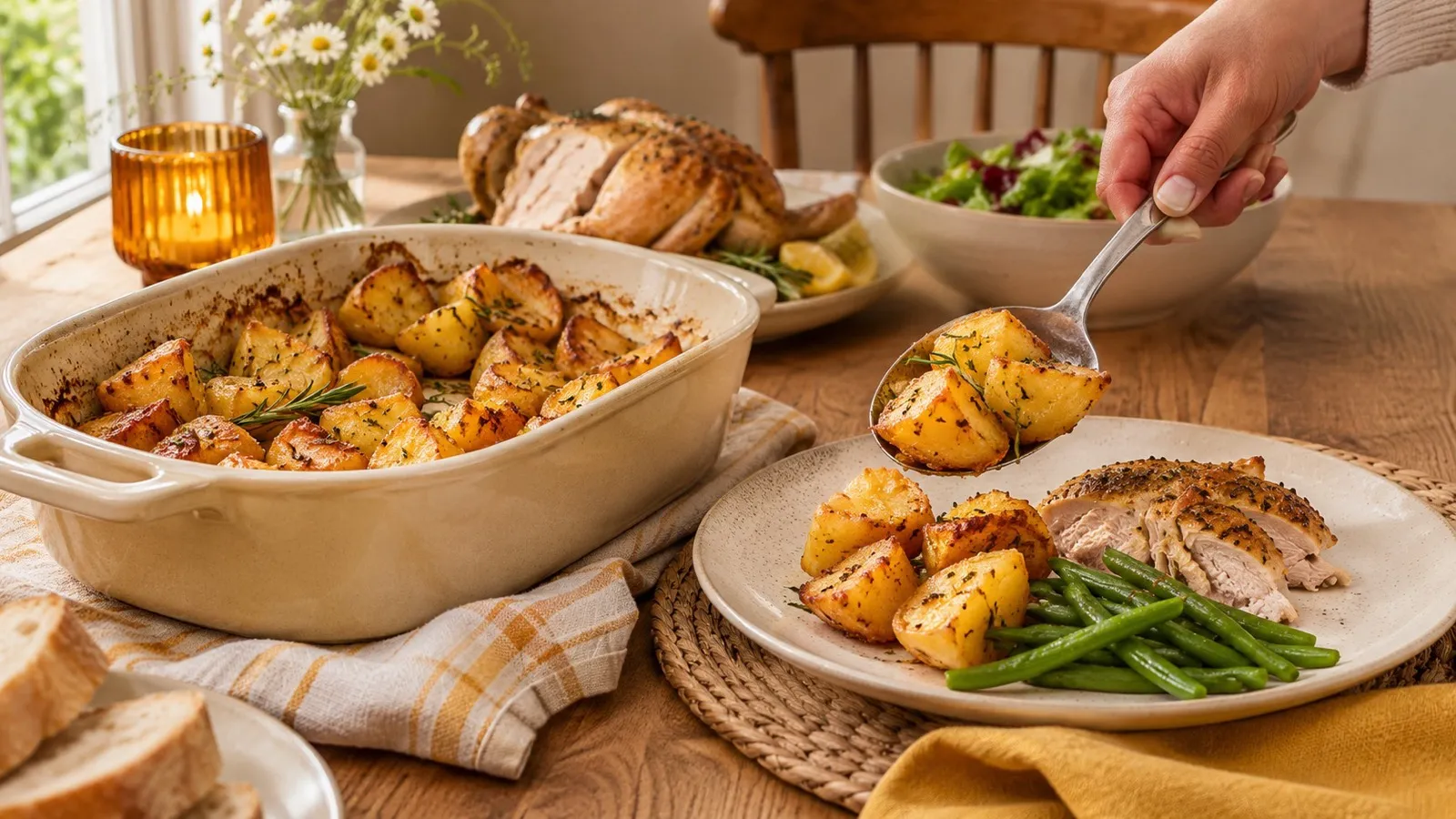
The bowl of pasta begins at one end of the table. You take a spoonful and pass it on. Conversation moves, plates change, and the bowl returns. You take another spoonful that looks smaller than the first. By the time the table is cleared, you remember “some pasta,” not two separate servings.
Shared dishes make portions social and sequential. The food arrives in rounds, while the diary asks for a total. The serving spoon can connect those rounds.
Learn the spoon you are using
At home, weigh one ordinary level spoonful of the food before dinner. Do not pack it tightly or sculpt it into an unusually neat portion. Serve it the way you normally would. Repeat once or twice if the food is irregular, then use the observations as a range rather than declaring one exact spoon value forever.
The same spoon holds different weights of rice, salad, stew, and roasted vegetables. It also holds more when heaped than level. A familiar utensil is a portion reference only when paired with the food and serving style.
You do not need to measure at every meal. The small experiment gives you a visual memory: this serving spoon of cooked pasta, filled about this high, is roughly this kind of portion. When the spoon comes back, count another comparable amount.
Add rounds instead of rewriting the meal
Record the first serving, then add the second as a fraction or another spoonful. If the refill was about half the size, increase the component by roughly half of the first portion. This is clearer than duplicating the entire plate, which would also duplicate sauce, protein, and vegetables you did not take again.
When the second spoonful is different (more sauce, fewer solids), note the difference. A serving from the bottom of a casserole can be wetter than one from the top. Stirring a mixed dish before serving makes spoon-based portions more comparable.
For separate foods, keep separate counts. Two spoons of potatoes and one spoon of green beans are not “three spoons of dinner.” The utensil is helping with amount; the food name still matters.
The bowl’s change provides another boundary
If you know the finished weight of a homemade batch, the amount remaining after dinner can show how much the table served. That total does not assign individual shares, but it can catch impossible memories. If four people together ate half the bowl, one person’s estimate should not quietly exceed the amount that left it.
Combine the shared boundary with personal rounds. You remember two spoonfuls, someone else remembers one, and the bowl shows a plausible total. The evidence supports a reasonable estimate without requiring everyone to weigh their plate.
At a buffet or potluck, the original bowl may be refilled from the kitchen, so the visible change is less reliable. Use the spoon and your plate instead.
Serving utensils create false consistency
The fact that everyone uses the same spoon can make portions seem standardized. They are not if one person levels the spoon against the bowl, another takes a heap, and a third drains sauce before serving. Watch the food on the spoon rather than counting the utensil alone.
Some dishes break the unit entirely. A lasagne server lifts a piece, not a fixed volume. Tongs can grab two asparagus spears or a handful. A ladle can hold a consistent amount of soup if filled the same way, but solids may settle between rounds. Choose the reference that fits the food.
If the utensil gives weak evidence, compare plate coverage or use a recipe fraction. There is no prize for forcing every shared dish into spoon arithmetic.
Make the refill memorable without interrupting dinner
Move a fork or napkin slightly after the first refill, or make a quick note on your phone when the bowl passes. A tiny cue can preserve the number of rounds without turning the table into a ledger.
Another method is to serve the amount you expect to eat at once. This creates one visible portion and lets the bowl travel without pulling your memory along. It is not a restriction; you can still take more and add it. The first plate simply becomes a stable reference.
At family meals, use language everyone already understands: one level spoon, one heaped spoon, half a spoon. These descriptions are not universal measures, but they are more informative than “a bit.”
Try one calibration at the next batch meal
Choose a dish you serve often, such as rice, pasta, or chilli. Weigh the empty plate, add one normal serving spoonful, and note the food weight. Add a second spoonful and see whether it is similar. The result teaches you about both the utensil and your serving habit.
Save the homemade recipe in PixNutri’s recipe collection with its finished batch weight. Then the spoon is not being asked to provide nutrition on its own. It only helps estimate how much of the recorded batch reached your plate.
When the bowl returns, you can enjoy the second round and still remember it. The spoon has already shown you what another serving looks like.
Sauces introduce a useful refinement. If a slotted spoon drains liquid while a solid spoon carries it, the same bowl can produce noticeably different portions. Record which utensil was used when you calibrate a familiar dish. For stew, a ladleful with mostly broth is not equivalent to one packed with solids, even if both fill the ladle.
Children’s and adults’ servings can also make a household spoon average misleading. Rather than dividing the whole bowl equally by diners, count your own rounds and use the table total only as a boundary. The method remains personal even when the dish is shared.
Finally, remember what stayed on your plate. Two spoonfuls served are not two spoonfuls eaten if part returned to the kitchen. Adjust the identifiable remainder, particularly when it is mostly one component.
When the same meal continues into leftovers, label the remaining batch weight after dinner. Tomorrow’s spoonfuls can then be estimated from the recorded recipe without repeating the original calibration. This also reveals whether the family actually ate the share you remember. The utensil helps describe individual rounds; the remaining batch protects the larger accounting across days.
Do not turn a calibrated spoon into a permanent universal shortcut. Serving utensils change, recipes thicken, and cooks heap differently. Recheck when the spoon, food, or habit visibly changes. Familiarity is useful precisely because you know when it no longer fits.
Written by the PixNutri Editorial Team. PixNutri provides general information, not medical advice. Learn how we work: Methodology · Nutrition sources · Editorial policy
Spotted a factual error? Report it to our editorial team. We review every report and update the page if needed.
