
The café called it a regular. The cup did the explaining.
You order a regular latte because it is the middle option on the board. The barista reaches for a cup that looks larger than the regular at the café near...
By PixNutri Editorial Team · Published November 23, 2026 · Last updated November 23, 2026 · 5 min read
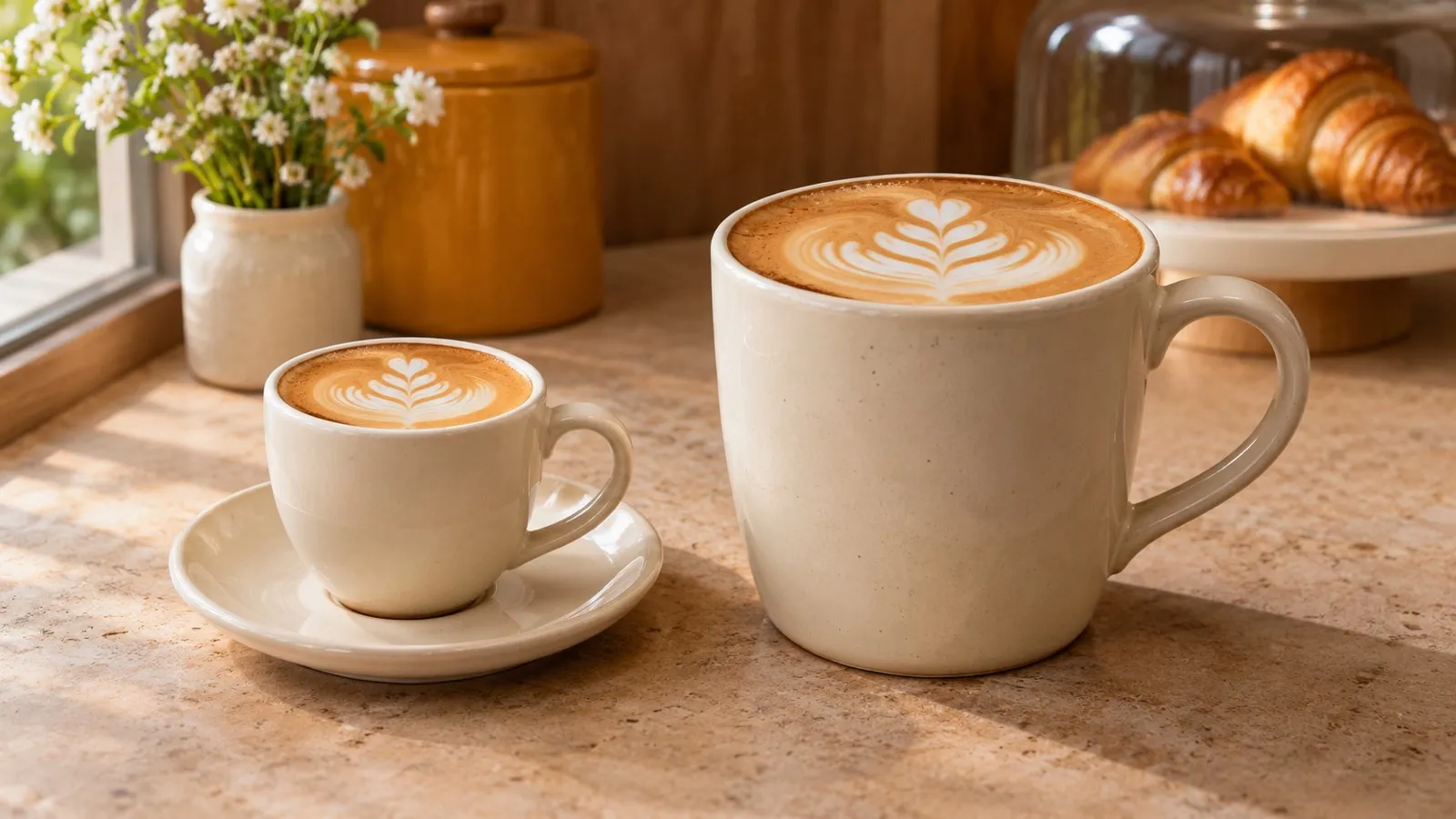
You order a regular latte because it is the middle option on the board. The barista reaches for a cup that looks larger than the regular at the café near your office. Both drinks have the same ordinary name. The cups do not have the same ordinary size.
“Regular” is a purchasing choice, not a unit of volume. It means the café’s default, its middle cup, or whatever size the menu designer decided not to call small or large. When you record the drink, the cup is the better source.
Find the volume behind the name
Start with the menu. Many cafés show fluid ounces or millilitres beside each size, sometimes only on the full menu rather than the board. A chain’s website or app may list the exact volume and nutrition for each named size. Match the location and current product when possible; menus and recipes can vary by country.
If the cup has a printed capacity, use it as the maximum drink volume, not proof that every millilitre was filled with latte. Foam, headspace, ice, and the space left below the rim all affect what was actually served. Still, a stated cup size is a much stronger reference than “regular.”
For an independent café without published details, ask the barista what size the cup is. It is a normal ordering question, especially when choosing between sizes. You do not need to explain your diary. “How many millilitres is the regular?” is enough.
Coffee is rarely the part that changes the estimate most
For a plain brewed coffee, cup size is the main quantity clue, while additions such as milk, cream, sugar, and syrup often deserve separate attention. For a latte, cappuccino, mocha, or iced drink, the milk and additions make the beverage composition important.
Read the order back to yourself: regular oat latte, one pump of syrup; regular whole-milk cappuccino; regular iced coffee with a splash of cream. That description narrows the reference far more than the size word alone.
If the café publishes nutrition, select the milk and customization you actually chose. If not, estimate the milk volume from the drink style and cup, then record syrup or sugar separately. Keep the estimate broad when the recipe is unknown. A cup can reveal capacity, but it cannot reveal how much milk the barista steamed or how generous the “splash” was.
Ice and foam occupy space too
An iced drink in a clear cup looks easy to measure until you notice how much of the volume is ice. The cup capacity is not the liquid volume. If the café publishes the drink as served, use its serving information. If you are reconstructing it yourself, note the amount of ice and avoid treating the whole cup as milk or sweetened coffee.
Foam creates a similar issue in hot drinks. A cappuccino may fill the same cup as a latte while containing a different balance of milk and foam. The cup tells you the outer boundary; the drink type tells you how to interpret what is inside.
When the foam collapses, the lower liquid line is not evidence that you drank part of the beverage. It is a change in structure. This is why weighing or measuring the finished drink at home is more reliable than comparing the height of foam before and after.
Use the cup as a repeatable reference
If you buy the same drink often, take the empty cup home once. Rinse it, fill it with water to the usual beverage line, and transfer the water to a measuring jug or weigh it. Water provides a convenient volume check because its grams are close to its millilitres under ordinary kitchen conditions. This measures the cup and fill line, not the nutritional composition of the drink.
Save the result as a personal reference: “Café A regular hot cup, filled below rim.” The next time you order the same drink, you do not need to repeat the exercise. If the café changes its cups, the visible difference is your prompt to check again.
Do not generalize that reference to every café. A regular at Café A can be a small at Café B and something else at a train station kiosk. Store the café name with the drink entry so the size label retains context.
What if you did not finish it?
Look at what remained before the cup is cleared. If you drank about three quarters of a fairly uniform latte, enter roughly that share of the full drink. If syrup settled at the bottom or foam remained on top, the leftovers may not represent an even share of every ingredient. A rough fraction is still better than automatically logging the whole cup, but it should remain rough.
For a drink you take home, you can weigh the remaining liquid in a container and compare it with the initial amount if known. At a café, a photo of the remaining level can be enough. The aim is not laboratory measurement; it is remembering that a purchased drink and a consumed drink can differ.
A better order note
Before leaving the counter, save four details: café, cup volume or named size, drink type, and customization. “Regular latte” becomes “Café A, 350 mL cup, oat latte, unsweetened.” That line is both easier to match and more useful next time.
If the café lists a full nutrition figure for exactly that configuration, use it. If you need to estimate, the note gives you the pieces to estimate honestly. PixNutri’s nutrition label guide can help you compare serving descriptions and volumes without losing track of the heading.
The café can keep calling it regular. Your diary can call it what the cup actually explains.
Temperature can create one more visual trap. A hot drink may be served with room for foam, while an iced drink uses a cup with a domed lid and an apparent volume that includes the dome. Do not measure to the absolute rim if the beverage never reached it. Mark the actual fill line and note whether whipped cream or cold foam occupied the space above the liquid.
Reusable cups shift the question again. When you bring your own, the café’s named size may describe the recipe dispensed rather than your cup’s full capacity. A large tumbler does not prove you received a large drink. Confirm the ordered recipe size, then treat the reusable vessel as a container, not as the portion itself.
Written by the PixNutri Editorial Team. PixNutri provides general information, not medical advice. Learn how we work: Methodology · Nutrition sources · Editorial policy
Spotted a factual error? Report it to our editorial team. We review every report and update the page if needed.
