Mediterranean Diet: A Beginner's Guide and 7-Day Meal Plan
What the Mediterranean diet is, what PREDIMED really showed after its 2018 reanalysis, a food list and a simple 7-day meal plan you can start this week.
By PixNutri Editorial Team · Published May 23, 2026 · Last updated May 23, 2026 · 7 min read
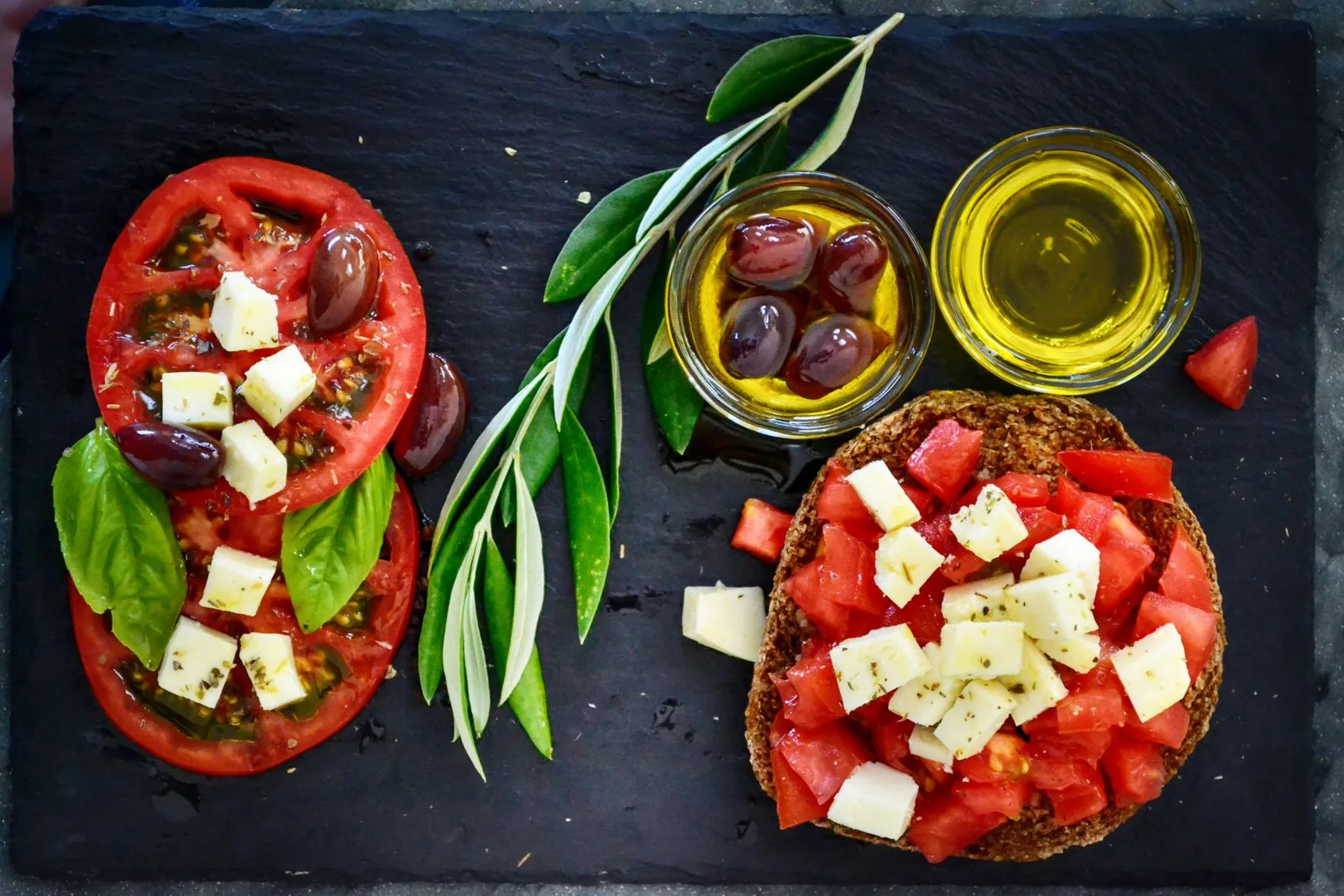
The Mediterranean diet is a way of eating built on vegetables, fruit, whole grains, beans, nuts, olive oil and fish, with smaller amounts of dairy, eggs and poultry and little red meat. It is one of the best-studied eating patterns for heart health, and it has no strict rules or forbidden foods. For weight loss it works when portions are right, because olive oil and nuts are calorie-dense.
This Mediterranean diet guide covers what to eat, what the key trials really found, and a simple meal plan to start with.
What the Mediterranean diet is
The Mediterranean diet describes the traditional way of eating in places like Crete, the rest of Greece and southern Italy in the mid-20th century. In 1993, the Harvard School of Public Health, the Oldways Preservation and Exchange Trust and the WHO Regional Office for Europe turned it into the Mediterranean Diet Pyramid. It is a pattern, not a points system, and it does not set portion sizes.
According to Harvard’s summary of the pattern:
- Every day: vegetables, fruit, whole grains, beans and other legumes, nuts, herbs and spices, with olive oil as the main added fat
- At least twice a week: fish and seafood
- In smaller portions, daily or a few times a week: poultry, eggs, cheese and yogurt
- A few times a month: red meat
- Main drink: water
- Also part of it: daily physical activity and shared meals
The traditional pattern includes wine with meals. That is the one part we would not copy for health reasons: the WHO Regional Office for Europe states that no level of alcohol consumption is safe for health. If you do not drink, there is no reason to start.
What the research shows
PREDIMED, and why it was retracted and republished
PREDIMED is the trial most people mean when they say “the Mediterranean diet prevents heart attacks.” It enrolled 7,447 people in Spain aged 55 to 80 who were at high cardiovascular risk but had no heart disease yet. They were assigned to one of three diets: Mediterranean with extra-virgin olive oil, Mediterranean with mixed nuts, or a control diet with advice to reduce fat. The Mediterranean groups received free olive oil or nuts and were not asked to cut calories.
The results were first published in 2013. The investigators later found problems with how some participants were assigned: some household members were enrolled without randomization, at one of the 11 sites some participants were assigned without randomization, and another site used randomization tables inconsistently. In 2018 the original paper was withdrawn and replaced with a reanalysis that did not assume everyone had been properly randomized.
The reanalysis reached similar conclusions. After a median of 4.8 years, a major cardiovascular event (heart attack, stroke or cardiovascular death) occurred in:
- 3.8% of the olive oil group
- 3.4% of the nuts group
- 4.4% of the control group
The adjusted hazard ratios were 0.69 for olive oil and 0.72 for nuts, which is roughly a 30% lower relative risk. Results were similar when the researchers left out 1,588 participants whose assignment was known or suspected to have departed from the protocol.
What “30% lower risk” means in real numbers
Relative risk sounds big. It helps to convert it into absolute terms:
- Olive oil vs control: 4.4% − 3.8% = 0.6 percentage points, or about 6 fewer events per 1,000 people over roughly five years
- Nuts vs control: 4.4% − 3.4% = 1.0 percentage point, or about 10 fewer events per 1,000 people
That is a meaningful benefit for a diet change, in people who were already at high risk. It is not a guarantee for any one person, and the trial could not blind people to what they were eating.
CORDIOPREV: people who already had heart disease
The CORDIOPREV trial in Córdoba, Spain, followed 1,002 people with established coronary heart disease for 7 years, comparing a Mediterranean diet with a low-fat diet. Major cardiovascular events occurred in 87 people on the Mediterranean diet and 111 on the low-fat diet, with adjusted hazard ratios of about 0.72 to 0.75 in favor of the Mediterranean diet. The effect was clear in men; among the 175 women in the trial, no difference between the diets was found.
Lasting benefits
A 2020 BMJ network meta-analysis of popular diets for people with overweight found that most diets’ improvements in blood pressure and cholesterol largely disappeared by 12 months. The Mediterranean diet was the exception whose cardiovascular risk factor benefits held up at one year.
Is the Mediterranean diet good for weight loss?
It can be, but it is not automatic. Harvard points out a real risk: because the pattern does not specify portions, you can gain weight on it, especially with generous olive oil, nuts, cheese and bread. PREDIMED was not a weight-loss trial.
A few ways to make it work for weight loss:
- Measure oil for a week or two. Pour from a tablespoon instead of the bottle until you know what a portion looks like.
- Use nuts as a garnish or a small handful, not a bowlful.
- Fill half your plate with vegetables and a quarter with beans, fish or poultry.
- Keep an eye on bread and pasta portions, and choose whole-grain versions.
- Create a modest deficit. Our guide to the calorie deficit shows how.
Logging a few days of meals is the fastest way to find out where the calories hide. With PixNutri you can photograph a plate of pasta with olive oil and get an estimate of calories, protein, carbs, fat and fiber, then adjust the portion or add the extra spoon of oil yourself, since hidden fats are the part photos see least.
Mediterranean diet food list
| Eat often | Eat in moderation | Eat rarely |
|---|---|---|
| Vegetables and leafy greens | Cheese and yogurt | Red meat |
| Fruit | Eggs | Processed meat |
| Beans, lentils, chickpeas | Poultry | Sweets and pastries |
| Whole grains: oats, whole-wheat bread and pasta, brown rice, barley | Potatoes | Sugary drinks |
| Nuts and seeds | Refined grains | |
| Extra-virgin olive oil | Butter as the main fat | |
| Fish and seafood (at least twice a week) | ||
| Herbs, spices, garlic, lemon |
The benefits seem to come from the whole pattern, not from single foods, so adding a spoon of olive oil to an otherwise unchanged diet is not the same thing.
A simple 7-day Mediterranean meal plan
This is a template, not a prescription. Adjust portions to your own calorie needs.
| Day | Breakfast | Lunch | Dinner |
|---|---|---|---|
| Mon | Oats with walnuts, berries and cinnamon | Lentil soup, whole-grain bread, side salad | Baked salmon, roasted vegetables, brown rice |
| Tue | Greek yogurt with fruit and a few almonds | Chickpea salad with tomato, cucumber, parsley, olive oil and lemon | Whole-wheat pasta with tomato sauce, white beans and spinach |
| Wed | Whole-grain toast with tomato, olive oil and a boiled egg | Leftover pasta and beans, green salad | Grilled chicken, bulgur with herbs, grilled courgette |
| Thu | Oats with grated apple and pumpkin seeds | Tuna, bean and red onion salad | Vegetable omelette, whole-grain bread, tomato salad |
| Fri | Yogurt with orange and walnuts | Minestrone with a slice of whole-grain bread | Baked white fish, potatoes and green beans with olive oil |
| Sat | Toast with hummus and cucumber | Greek salad with feta, olives and chickpeas | Seafood or vegetable paella with a side salad |
| Sun | Scrambled eggs with spinach and whole-grain toast | Roast vegetables with lentils and a little goat cheese | Grilled sardines or mackerel, salad, crusty whole-grain bread |
Snacks: a piece of fruit, a small handful of nuts, yogurt, or vegetables with hummus. For more fiber-rich ideas, see our guide to how much fiber per day. If budget is a concern, beans, lentils, oats, frozen vegetables and canned fish keep this plan affordable; our guide to healthy eating on a budget has more.
PixNutri Pro also includes AI meal plans with a Mediterranean option if you prefer a plan fitted to your calorie goal.
Who should check with a professional first
The Mediterranean pattern is a gentle, flexible way of eating that suits most adults. Talk to your doctor or a registered dietitian first if you have kidney disease, take medication where your diet matters, are pregnant or breastfeeding, or have a nut or fish allergy that rules out some key foods. They can help you adapt the pattern rather than drop it.
FAQ
What can you not eat on the Mediterranean diet?
Nothing is strictly banned. Red and processed meat, sweets, sugary drinks and refined grains are kept to small amounts.
Is the Mediterranean diet good for losing weight?
It can help if you also eat fewer calories than you burn. Watch portions of olive oil, nuts, cheese and bread, which are easy to overdo.
Do I have to drink wine on the Mediterranean diet?
No. Water is the main drink. The WHO Regional Office for Europe states there is no safe level of alcohol for health, so there is no reason to start drinking.
How quickly does the Mediterranean diet work?
Changes in weight and some blood markers can appear within months, but the heart benefits in PREDIMED were measured over about five years. Think of it as a long-term pattern.
Sources
- Harvard T.H. Chan School of Public Health, The Nutrition Source. Diet Review: Mediterranean Diet
- Estruch R, et al. Primary Prevention of Cardiovascular Disease with a Mediterranean Diet Supplemented with Extra-Virgin Olive Oil or Nuts (PREDIMED, republished). N Engl J Med. 2018
- Delgado-Lista J, et al. Long-term secondary prevention of cardiovascular disease with a Mediterranean diet and a low-fat diet (CORDIOPREV). Lancet. 2022
- Ge L, et al. Comparison of dietary macronutrient patterns of 14 popular named dietary programmes: network meta-analysis. BMJ. 2020
- WHO Regional Office for Europe. No level of alcohol consumption is safe for our health
Written by the PixNutri Editorial Team. PixNutri provides general information, not medical advice. Learn how we work: Methodology · Nutrition sources · Editorial policy
Spotted a factual error? Report it to our editorial team. We review every report and update the page if needed.
