Best Foods for Weight Loss: Filling Foods That Help You Eat Less
The best foods for weight loss keep you full on fewer calories: vegetables, fruit, pulses, lean protein, yogurt, whole grains and nuts. Evidence and list here.
By PixNutri Editorial Team · Published September 15, 2026 · Last updated September 15, 2026 · 7 min read
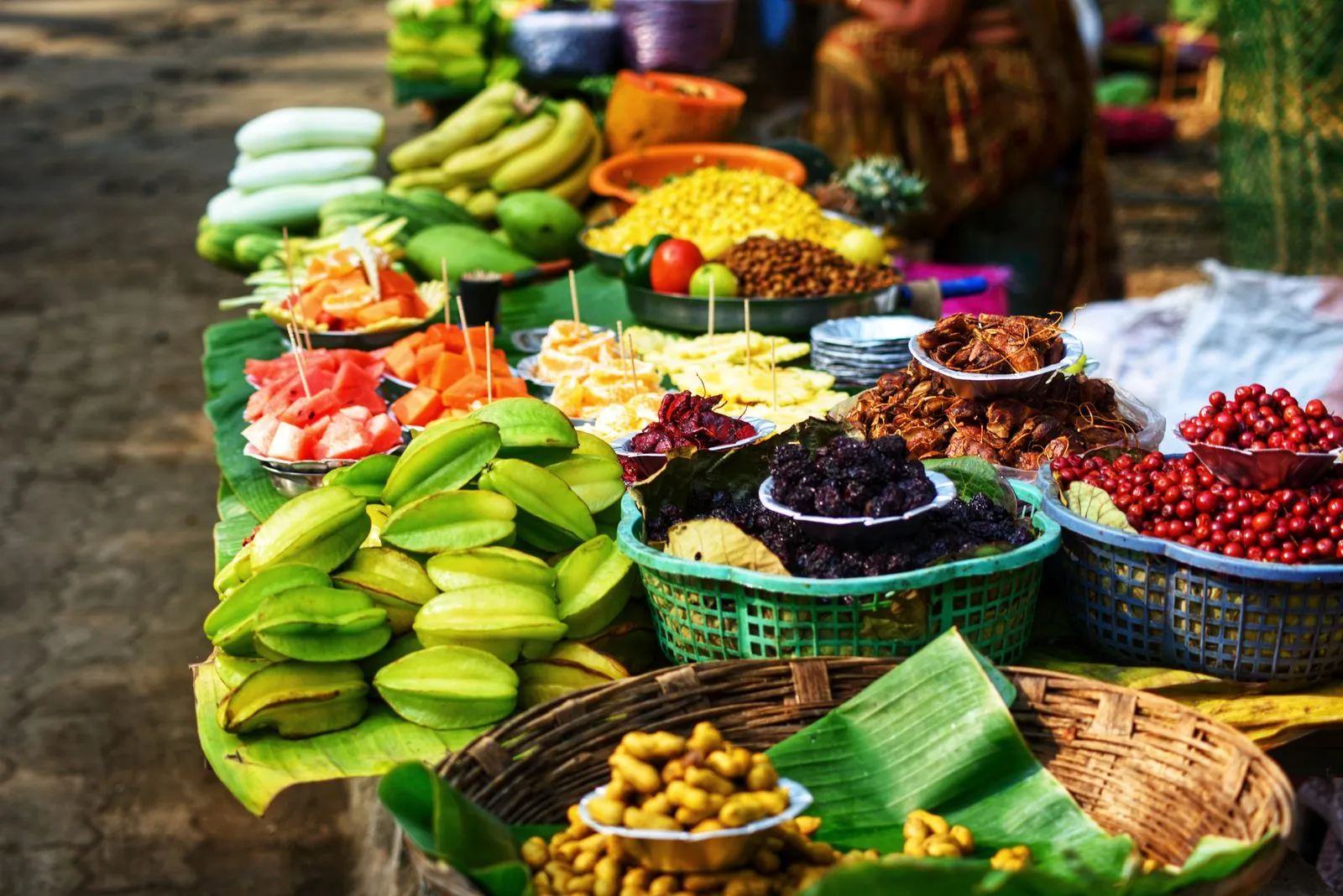
The best foods for weight loss are the ones that fill you up for relatively few calories: vegetables, whole fruit, beans and lentils, lean protein such as fish, chicken, eggs and tofu, plain yogurt, whole grains, and nuts in measured portions. No single food burns fat. These foods help because they make a calorie deficit easier to live with, so you can eat satisfying amounts and still lose weight.
What makes a food good for weight loss
Weight loss comes from eating a little less energy than you use over time. The best foods are the ones that make that less painful. Three properties matter most.
Low energy density
Energy density is the number of calories per gram of food. Research by Barbara Rolls and colleagues shows that people tend to eat a fairly consistent weight of food, so when meals have fewer calories per gram, people eat fewer calories without trying harder. Several trials found that lowering the energy density of the diet by adding water-rich foods such as fruit and vegetables was linked to substantial weight loss, even when people weren’t told to restrict calories.
Protein
A review in the American Journal of Clinical Nutrition found that higher-protein meals have a modest effect on fullness, and that higher-protein, reduced-calorie diets led to greater fat loss and better preservation of lean mass in shorter, tightly controlled studies. The authors suggested around 1.2 to 1.6 g of protein per kg of body weight per day, potentially with about 25 to 30 g per meal. For your own number, see how much protein per day.
Fibre
In the POUNDS Lost trial, 345 adults followed calorie-restricted diets for 6 months and lost an average of about 7.3 kg. Fibre intake was the strongest dietary predictor of weight loss and of sticking to the diet, independent of the macronutrient mix. Our guide to fiber per day has practical ways to get more.
How much 200 kcal looks like
This is the clearest way to see energy density. Using USDA food composition data, here is how much of each food gives you about 200 kcal:
| Food | kcal per 100 g | About 200 kcal is |
|---|---|---|
| Cabbage, raw | 25 | 800 g |
| Strawberries | 32 | 625 g |
| Broccoli, boiled | 35 | 570 g |
| Apple | 52 | 385 g |
| Greek yogurt, plain, fat-free | 59 | 340 g |
| Lentils, boiled | 116 | 170 g |
| Egg, hard-boiled | 155 | 130 g |
| Chicken breast, roasted | 165 | 120 g |
| White bread | 266 | 75 g |
| Croissant | 406 | 50 g |
| Chocolate chip cookies | 492 | 40 g |
| Potato chips (crisps) | 532 | 38 g |
| Almonds | 579 | 35 g |
The arithmetic is simply 200 ÷ kcal per 100 g × 100. For strawberries: 200 ÷ 32 × 100 = 625 g.
Two bowls of strawberries or a handful of crisps: same calories, a very different amount of food. That doesn’t make crisps forbidden. It just shows why the foods at the top of the table do so much of the heavy lifting.
The best foods for weight loss, by group
1. Non-starchy vegetables
Leafy greens, cabbage, broccoli, courgette, peppers, tomatoes, cucumber, mushrooms. They are mostly water and fibre, so they add volume for very few calories. In a long-term study of more than 120,000 US adults, eating more vegetables was linked to less weight gain over time.
Try: fill half your plate with vegetables, or start dinner with a salad or a vegetable soup.
2. Whole fruit
Berries, apples, oranges, pears, melon. In the same study, eating more fruit was linked to less weight gain. Whole fruit comes with fibre and water that juice lacks.
Try: fruit with yogurt instead of a pastry, or a piece of fruit as your afternoon snack.
3. Beans, lentils and chickpeas
They combine protein and fibre, two of the strongest fullness factors, at a low price. 100 g of boiled lentils provides 116 kcal, 9 g of protein and 7.9 g of fibre.
Try: add a tin of beans to soups, stews or salads, or make a lentil curry.
4. Lean protein: fish, poultry, eggs, tofu
Protein helps you stay full and supports lean mass while you lose weight. Canned tuna in water gives 19.4 g of protein for 86 kcal per 100 g, roasted chicken breast 31 g for 165 kcal.
Try: a palm-sized portion of protein at every meal.
5. Plain yogurt and other high-protein dairy
Of the foods linked to less weight gain in the long-term US analysis, yogurt had the strongest link. Plain Greek yogurt, skyr, quark and cottage cheese are high in protein for their calories.
Try: plain yogurt with berries and a spoon of oats for breakfast. More ideas in high-protein breakfast ideas.
6. Whole grains, including oats
Oats, whole-wheat bread, brown rice, barley and whole-grain pasta add fibre. More whole grains were also linked to less weight gain.
Try: swap white bread or rice for a whole-grain version, and keep the portion to about a quarter of your plate.
7. Nuts, in measured portions
Nuts are energy-dense (almonds have 579 kcal per 100 g), yet eating more nuts was associated with less weight gain in the long-term US study. The practical answer is to measure: a small handful of about 30 g of almonds is roughly 174 kcal (579 × 0.3).
Try: nuts as a topping or a planned snack, not straight from the bag. See healthy snacks under 200 calories.
Foods that make weight loss harder
Ultra-processed foods
In a tightly controlled NIH trial, 20 adults lived in a clinical centre and ate either an ultra-processed or an unprocessed diet for 2 weeks each, as much as they wanted. The meals offered were matched for calories, sugar, fat, fibre and salt. On the ultra-processed diet people ate about 500 kcal more per day and gained about 0.9 kg; on the unprocessed diet they lost about 0.9 kg.
Sugary drinks and crisps
In the long-term US study, each extra daily serving over 4 years was associated with weight gain: about 0.8 kg (1.69 lb) for potato chips and about 0.45 kg (1.00 lb) for sugar-sweetened drinks. Potatoes, red meat and processed meat were also linked to gain. By contrast, each extra daily serving of yogurt was linked to about 0.37 kg (0.82 lb) less gain, nuts about 0.26 kg (0.57 lb) and fruit about 0.22 kg (0.49 lb). This was observational research, so it shows associations, not proof, but the pattern fits the energy-density findings.
Putting it together: a sample day
- Breakfast: 200 g plain Greek yogurt, 150 g strawberries, 30 g oats.
- Lunch: big salad with 150 g lentils, vegetables, a boiled egg and a teaspoon of olive oil.
- Snack: an apple and a small handful of nuts.
- Dinner: 120 g roasted chicken or tofu, a large portion of roasted vegetables, a small portion of brown rice.
Your total depends on your portions and your calorie goal. PixNutri can give you a quick AI estimate from a photo of each meal, which you then review and edit, and the barcode scanner covers packaged foods. Photo estimates can be off with hidden oil or sauces, so check those in particular.
If you have diabetes, kidney disease, take medication, are pregnant or breastfeeding, have a history of an eating disorder or are under 18, talk to your doctor or a registered dietitian before changing your diet to lose weight.
FAQ
What foods burn belly fat?
No food burns fat from a specific area. Fat loss comes from an overall calorie deficit. Filling, low-energy-density foods like vegetables, fruit, pulses and lean protein make that deficit easier.
What is the most filling food for weight loss?
Foods high in water, fibre or protein tend to be the most filling per calorie: vegetables, fruit, beans and lentils, eggs, fish, chicken and plain yogurt.
Are bananas good for weight loss?
Yes, in normal portions. A banana has about 89 kcal per 100 g plus some fibre, so it is far less energy-dense than cookies (492 kcal per 100 g) or most packaged sweets.
Do I have to cut out carbs to lose weight?
No. Whole grains, fruit and pulses are carbohydrate foods and appear on the list of foods linked to less weight gain. What matters most is your total calorie intake and how full your meals keep you.
Can I eat as much of these foods as I want?
Non-starchy vegetables, almost. For everything else, portions still count. Nuts, oils and even whole grains add up quickly, so measure them until you know what a portion looks like.
Sources
- Rolls BJ. The relationship between dietary energy density and energy intake. Physiol Behav, 2009
- Mozaffarian D, et al. Changes in diet and lifestyle and long-term weight gain in women and men. N Engl J Med, 2011
- Hall KD, et al. Ultra-processed diets cause excess calorie intake and weight gain: an inpatient randomized controlled trial. Cell Metab, 2019
- Leidy HJ, et al. The role of protein in weight loss and maintenance. Am J Clin Nutr, 2015
- Miketinas DC, et al. Fiber intake predicts weight loss and dietary adherence in adults consuming calorie-restricted diets: the POUNDS Lost study. J Nutr, 2019
- USDA FoodData Central (SR Legacy food composition data)
Written by the PixNutri Editorial Team. PixNutri provides general information, not medical advice. Learn how we work: Methodology · Nutrition sources · Editorial policy
Spotted a factual error? Report it to our editorial team. We review every report and update the page if needed.
