
Eating Out While Counting Calories: Restaurant Tips That Work
How to eat out while counting calories: what restaurant meals really contain, how to read menus, smart swaps by cuisine and a simple way to log your meal.
By PixNutri Editorial Team · Published April 12, 2026 · Last updated April 12, 2026 · 7 min read
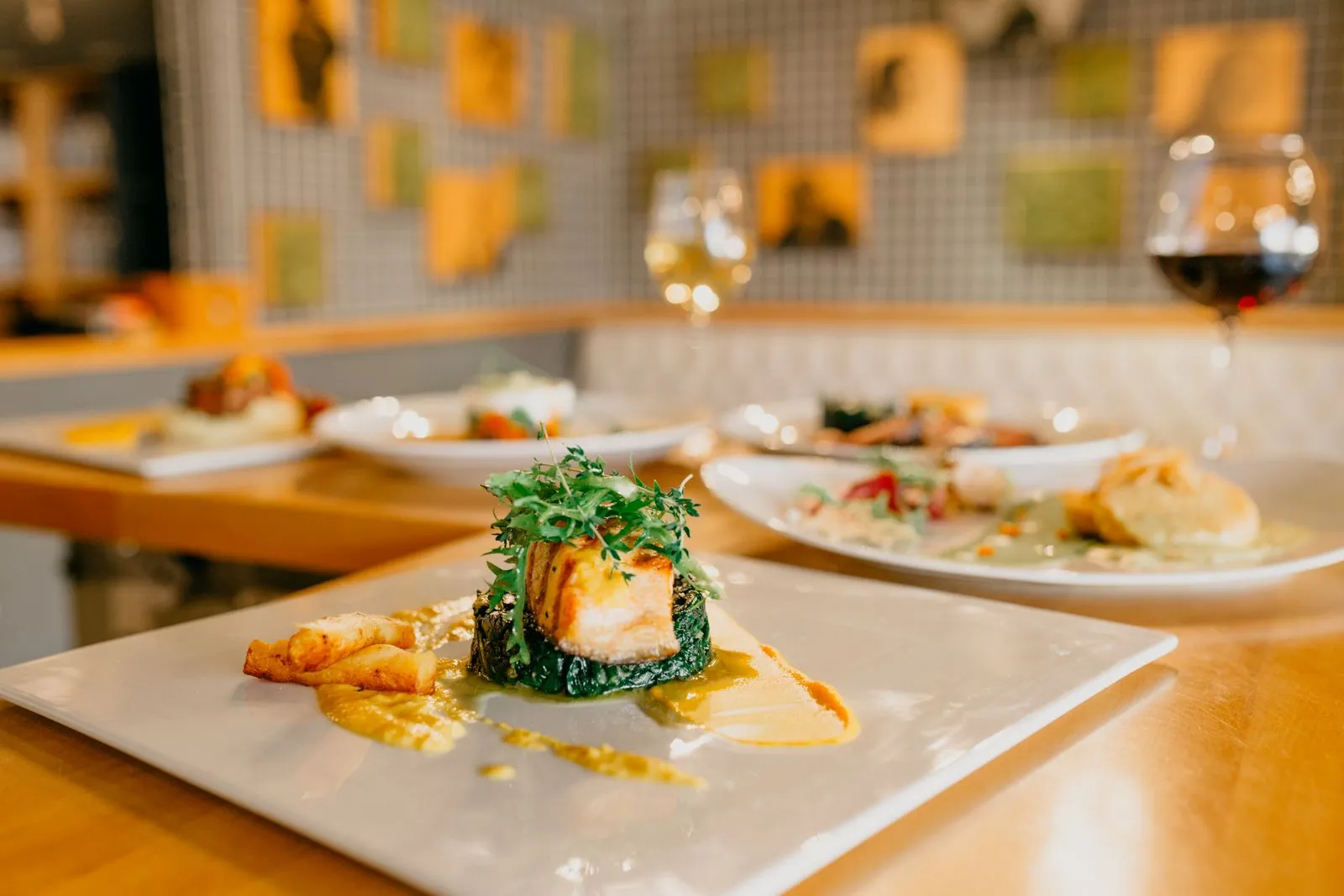
Eating out while counting calories works best if you plan the meal into your day instead of trying to make it “fit” afterwards. Restaurant meals are often large, so look at the menu in advance, choose a dish with a simple cooking method, control the extras (bread, sauces, drinks) and log your best estimate, rounding up rather than down. One restaurant meal will not undo your progress; what matters is your pattern across the week.
Here is what restaurant food really contains, and a calm, practical way to handle it.
How many calories are in a restaurant meal
More than most people guess. A study in the Journal of the Academy of Nutrition and Dietetics measured the energy in the most frequently ordered meals from restaurants in three US cities using laboratory analysis. Meals from independent restaurants averaged about 1,205 kcal each, similar to large chains. American, Italian and Chinese meals were among the highest, averaging about 1,495 kcal. And 92% of the meals contained more energy than people typically need for a single meal.
Big portions also change how much we eat. A review in the Proceedings of the Nutrition Society describes the “portion size effect”: when people are served larger portions of energy-dense food, they reliably eat more, in children and adults alike. So the plate in front of you is not a neutral guide to how much you need.
None of this means you should avoid restaurants. It means it helps to decide before the food arrives.
Can you trust the calories on the menu
In many places you now see calories printed on menus:
- United States: restaurants and similar food businesses that are part of a chain with 20 or more locations must show calories for standard menu items, along with a statement that 2,000 calories a day is used for general nutrition advice but needs vary. More nutrition details must be available on request.
- England: since April 2022, businesses with 250 or more employees that sell non-prepacked food for immediate consumption must show calories and the statement “adults need around 2000 kcal a day”.
Are these numbers accurate? A study in JAMA sent 269 restaurant foods to a lab. On average, the stated calories were close to the measured ones (about 10 kcal per portion apart). But individual dishes varied: 19% of foods contained at least 100 kcal more than stated, and dishes listed as lower in calories were more likely to contain more than the menu said.
Menu calories are a good starting point. Treat “light” options with a little extra caution and round them up.
Before you go
Look at the menu in advance
Most restaurants publish their menu online. Choosing at home, when you are not hungry and not influenced by what others order, is easier than choosing at the table. In PixNutri you can scan a restaurant menu and see which dishes fit the calories you have left for the day.
Budget your day around the meal
If you know you are eating out tonight, keep breakfast and lunch lighter but still filling, with protein and vegetables. Skipping meals entirely can leave you arriving very hungry, which makes sensible choices harder.
At the table: practical swaps
- Pick the cooking method. Grilled, baked, steamed, poached or roasted usually means less added fat than fried, breaded, creamy or “crispy”.
- Ask for sauces and dressings on the side. Then you decide how much to use.
- Swap one side. Salad or vegetables instead of fries, or half and half.
- Watch the bread basket. Decide in advance whether you want bread, and how much.
- Start with a vegetable soup or salad. A filling starter may make a smaller main feel like enough.
- Share or take half home. Especially with large pasta dishes, pizzas and desserts.
- Order a starter as your main. Often a sensible portion for one person.
- Plan dessert. If you want it, share it or choose it instead of a starter.
Drinks count too
Alcohol provides about 7 kcal per gram, almost as much as fat. According to the NHS:
| Drink | Calories |
|---|---|
| 175 ml glass of 12% wine | up to about 158 kcal |
| Pint (568 ml) of 5% beer | up to about 222 kcal |
| Double measure (50 ml) of 40% spirits | about 100 kcal |
Mixers, cocktails and sugary soft drinks add more. Alternating each alcoholic drink with water is an easy way to drink less without making a point of it.
Lighter choices by cuisine
| Cuisine | Often lighter | Often heavier |
|---|---|---|
| Italian | Tomato-based pasta sauces, grilled fish, minestrone, thin-crust pizza with vegetables | Cream or cheese sauces, carbonara, fried starters, garlic bread |
| Chinese | Steamed dishes, stir-fries with vegetables, clear soups, plain rice | Battered and deep-fried dishes, sweet-and-sour, fried rice and noodles |
| Indian | Tandoori and tikka dishes, dal, vegetable curries with tomato bases, plain rice or chapati | Creamy curries such as korma, fried samosas and bhajis, naan with butter |
| Mexican | Grilled chicken or bean dishes, salsa, soft tortillas | Cheese-heavy dishes, sour cream, fried tortilla chips |
| Burgers | Single patty, side salad, no extra sauce | Double patties, bacon and cheese, large fries, milkshakes |
| Japanese | Sashimi, nigiri, miso soup, edamame | Tempura, rolls with mayonnaise sauces or fried fillings |
These are general patterns, not rules. The same dish can vary a lot between restaurants, mostly because of oil, butter and portion size.
How to log a restaurant meal
- Use the menu calories if they exist. Log that number, and round up for “light” dishes.
- Otherwise, log it by its parts. A plate of grilled chicken, rice and vegetables is easier to estimate as three items than as one dish. See how to count calories without a food scale for hand-size portion guides.
- Add the fat you cannot see. Restaurant kitchens often use generous amounts of oil and butter. One tablespoon of olive oil alone is about 119 kcal (13.5 g × 884 kcal per 100 g, from USDA data).
- Photograph before you start eating. With PixNutri, a photo gives you an estimate of calories and macros that you can then adjust with the portion buttons or edit, for example to add oil or a sauce. Restaurant portions are exactly where photo estimates tend to come out low, so if the plate looks big, bump it up. We explain why in are AI calorie apps accurate.
- Log it and move on. An estimate that is roughly right is far more useful than a blank day.
A worked example
Say your daily target is 1,800 kcal and you have a restaurant dinner planned.
- Breakfast: Greek yoghurt with fruit and oats, about 350 kcal.
- Lunch: a big salad with chicken and a slice of wholegrain bread, about 450 kcal.
- That leaves 1,800 − 350 − 450 = 1,000 kcal for dinner.
- One 175 ml glass of wine at up to about 158 kcal leaves roughly 840 kcal for food.
Compare that with the average restaurant meal of about 1,205 kcal from the study above. A grilled main with vegetables, sauce on the side, and sharing a dessert fits. A creamy pasta, bread with butter and two glasses of wine probably does not, and that is fine occasionally: log it honestly and carry on the next day. Your calorie deficit is built across weeks, not single evenings.
Checklist for eating out while counting calories
- Look at the menu before you go and pick a first choice.
- Keep earlier meals lighter but include protein.
- Choose grilled, baked or steamed over fried or creamy.
- Sauces and dressings on the side.
- Decide on bread, alcohol and dessert in advance.
- Share, or take half home, when portions are large.
- Log the meal, add hidden fats and round up.
FAQ
How do I count calories at a restaurant with no nutrition information?
Break the dish into its parts (protein, starch, vegetables, sauce), estimate each with hand-size portions, then add oil or butter. A photo-based estimate can help, but check the portion and round up.
How many calories should I assume for a restaurant meal?
It depends on the dish, but in one US study the most frequently ordered restaurant meals averaged about 1,205 kcal, and 92% exceeded typical needs for a single meal. Many main courses land well above what people expect.
Can I eat out and still lose weight?
Yes. Plan the meal into your day, choose simpler dishes, control drinks and extras, and look at your weekly average. Occasional higher days are normal.
Are “light” menu options really lower in calories?
Often, but not always. A JAMA study found that foods listed with lower calories were more likely to contain more than stated. Round those numbers up a little.
Should I skip meals before eating out?
It is usually better not to. Lighter meals with protein and vegetables keep you from arriving very hungry, which makes it easier to order sensibly.
Sources
- Urban LE, et al. Energy Contents of Frequently Ordered Restaurant Meals and Comparison with Human Energy Requirements and USDA Database Information. Journal of the Academy of Nutrition and Dietetics. 2016
- Urban LE, et al. Accuracy of stated energy contents of restaurant foods. JAMA. 2011
- Hetherington MM, et al. Understanding the science of portion control and the art of downsizing. Proceedings of the Nutrition Society. 2018
- U.S. Food and Drug Administration. Menu Labeling Requirements
- UK Department of Health and Social Care. Calorie labelling in the out of home sector: implementation guidance
- NHS. Calories in alcohol
- USDA. FoodData Central (SR Legacy: olive oil, 884 kcal per 100 g)
Written by the PixNutri Editorial Team. PixNutri provides general information, not medical advice. Learn how we work: Methodology · Nutrition sources · Editorial policy
Spotted a factual error? Report it to our editorial team. We review every report and update the page if needed.
