Are AI Calorie Apps Accurate? What the Research Really Shows
Are AI calorie counter apps accurate? What independent studies found about photo-based calorie estimates, where they go wrong, and how to get better numbers.
By PixNutri Editorial Team · Published May 18, 2026 · Last updated May 18, 2026 · 7 min read
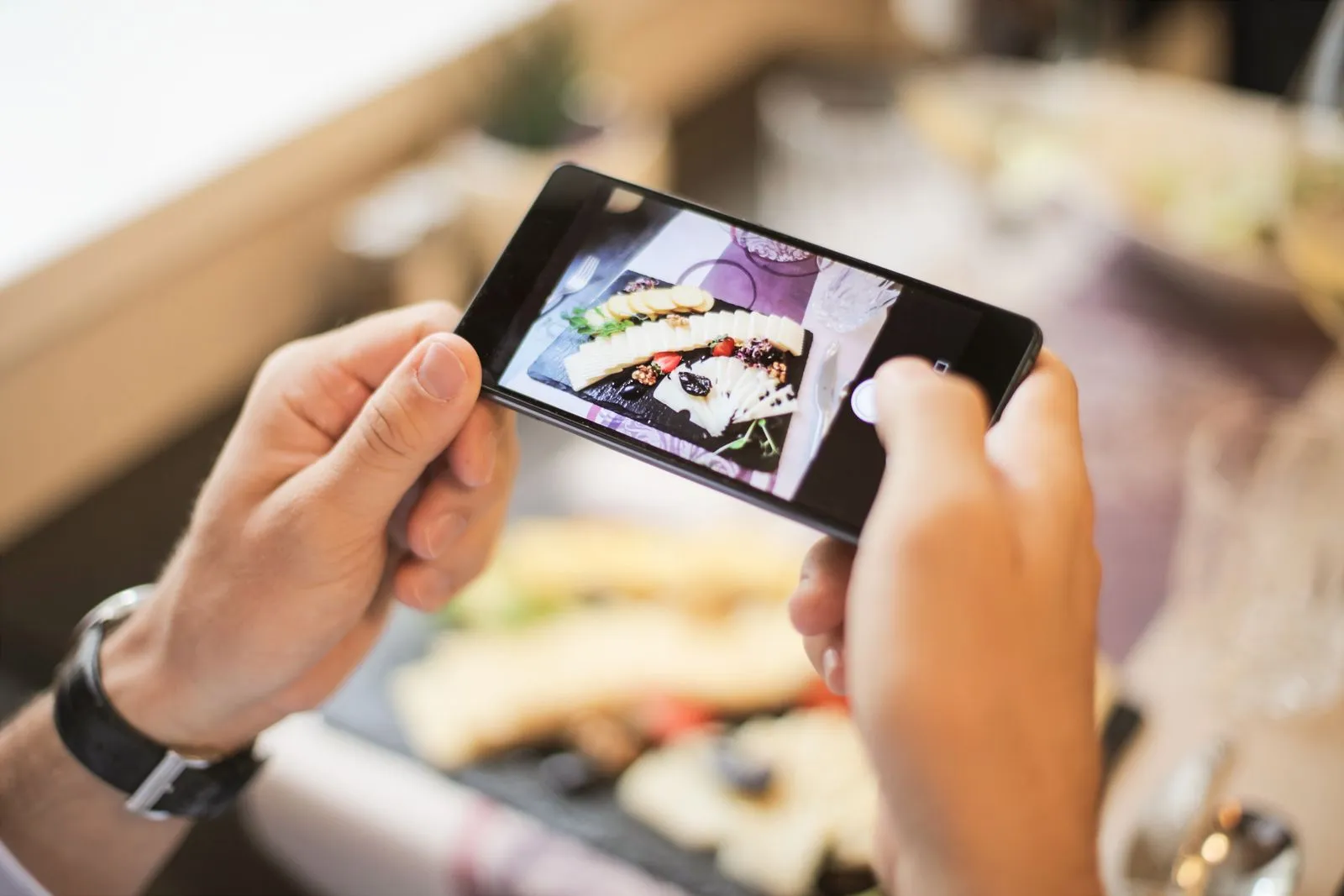
AI calorie counter apps are useful but not precise. In the best independent tests so far, general-purpose AI models estimating calories from a single food photo were off by about 36% on average, and they tended to underestimate larger portions. They are good at recognising what is on the plate and weaker at judging how much of it there is, so the most accurate results come when you check and correct the estimate.
That may sound disappointing, but it puts AI photo logging roughly in the same league as the traditional food diaries people have used for decades. Here is what the research actually measured, where the errors come from and how to use these apps well.
Are AI calorie apps accurate? What independent studies tested
There is no single “accuracy score” for AI calorie apps. Studies use different foods, different models and different reference methods. The fairest way to judge is to look at several of them side by side.
| Study | What was tested | Main result for calories |
|---|---|---|
| Fridolfsson et al., Current Developments in Nutrition, 2025 | 3 AI models, 52 photos of weighed food | Average error 35.8% (two best models) and 64.2% (third model) |
| O’Hara et al., Nutrients, 2025 | ChatGPT-4, 114 photos of 38 meals in 3 portion sizes | Foods identified well; weight underestimated in 76% of photos |
| Rodríguez-Jiménez et al., Nutrients, 2025 | ChatGPT-5, 195 dishes, with more or less extra information | Average error 30.5% from the photo alone, 13.9% with ingredients and amounts |
| Joubert et al., Diabetes Therapy, 2021 | A photo-recognition app vs. a manual app for carbohydrates | Photo app underestimated carbs by 7.2 g per meal on average |
The 2025 three-model comparison
Researchers in Gothenburg photographed 52 standardised meals and food items, weighed every component and calculated the true nutrient content with a nutrition database. They then asked three AI models to estimate the nutrients from the photos.
For calories, the mean absolute percentage error (MAPE) was 35.8% for ChatGPT-4o and for Claude 3.5 Sonnet, and 64.2% for Gemini 1.5 Pro. Errors for protein, fat and carbohydrates were higher, between about 42% and 110% depending on the model and nutrient. All three models underestimated more as portions got bigger.
The authors concluded that the two better models were about as accurate as traditional self-reported diet methods, without the effort, but not yet good enough for precise work such as clinical or sports nutrition.
ChatGPT and portion sizes
A team in Ireland tested ChatGPT-4 on 114 photos: 38 meals from a national nutrition survey, each shown in a small, medium and large portion. The model was good at naming foods, with a precision of 93%. It was much weaker at portions. Its weight estimates agreed well with reality for small meals, but not for medium and large ones, and it underestimated the weight in 87 of the 114 photos (76%). For 13 of the 16 nutrients studied, the estimates differed from the true values by more than 10%.
More information, better estimates
A 2025 study of ChatGPT-5 tested 195 dishes in several scenarios. From the photo alone, the average calorie error was 30.5%, or about 123 kcal per dish. Adding details the camera cannot see, such as the type and amount of fat and sweetener, the fat content of dairy and the type of meat, brought it to 24.4%. Adding the ingredients with their amounts brought it to 13.9%, about 53 kcal per dish.
The practical lesson is simple: the more you tell the app, the better the number.
A diabetes-focused check
For people counting carbohydrates, a 2021 French study compared a photo-recognition app with an app where users enter carbs manually. The photo app underestimated carbohydrates by 7.2 g per meal on average, and 30% of meals were off by more than 20 g, compared with 14% for the manual app. The authors still found both apps more accurate than the usual everyday errors of people with type 1 diabetes, but the gap matters when insulin doses depend on the number.
How AI compares with other ways of counting
Error is not unique to AI. A 2021 meta-analysis in Advances in Nutrition pooled validation studies of food diary apps where people log manually. On average, these apps underestimated energy intake by about 202 kcal per day compared with reference methods. When the app and the reference used the same food database, the gap shrank to about 57 kcal per day, which shows how much depends on the database behind the numbers.
So the honest comparison is not “AI versus perfect”. It is AI versus you typing and guessing portions, and both approaches have blind spots. Our guide on how to count calories covers the manual side.
Why photos are hard for AI
- Portion size. A photo has no built-in scale. This is the biggest source of error, and large portions are the most likely to be underestimated.
- Hidden fat and sugar. Oil in the pan, butter on vegetables, dressings and sauces can add hundreds of calories and are often invisible.
- Mixed and layered dishes. Rice under a curry, fillings in a wrap, cheese inside a sandwich.
- Look-alike foods. Whole milk and skimmed milk, regular and diet drinks, white and wholegrain bread.
- Photo quality. Dark, blurry or very close shots give the model less to work with.
- Test conditions. The 2025 three-model study used standardised photos taken from fixed angles, and its authors point out that real meals are more complex. Everyday accuracy may be worse than in the lab.
A worked example
Say your pasta dinner really contains 700 kcal. An average error of about 36% corresponds to roughly 250 kcal (700 × 0.36 = 252). So a single estimate could plausibly land anywhere from about 450 to 950 kcal.
Over a day, some random errors partly cancel out: one meal is overestimated, another underestimated. The problem is systematic error. If every large dinner is underestimated by 200 kcal, that does not cancel; it adds up to about 1,400 kcal over a week. That is why correcting the portion on big meals matters more than fussing over a small snack.
What this means for PixNutri
The studies above tested general-purpose AI models, not PixNutri, so they cannot tell you how accurate PixNutri is. We have not yet published our own benchmark, and we do not quote an accuracy percentage. The accuracy page explains what we know and what we are still testing.
What PixNutri does is built around the limits the research describes. Every photo estimate shows calories, protein, carbs, fat, fiber and sugar, and you can review and edit each value. Portion buttons (½, ¾, 1½, 2×) let you correct the most common error in one tap. For packaged food, the barcode scanner uses the nutrition data recorded in Open Food Facts, scaled to the amount you enter. You can also describe a meal in text or by voice, which gives the app information a photo cannot show.
How to get more accurate results from any AI calorie app
- Photograph from above, in good light, with the whole plate in view.
- Check the portion. If the plate is bigger than average, assume the estimate is low and adjust it.
- Add what the camera cannot see: cooking oil, butter, sauces, sugar in drinks.
- Use barcodes for packaged food instead of photos.
- Photograph mixed dishes before you stir them, or describe the main ingredients.
- Weigh a few of your usual foods once, so you learn what your normal portions look like. See how to count calories without a food scale.
- Judge your progress by weekly trends, not single meals.
When you need more than an estimate
If you use carbohydrate counts to dose insulin, have kidney disease, are pregnant, or have a history of disordered eating, work with a doctor or registered dietitian, and do not rely on photo estimates alone. For these situations, the studies above are clear that AI models are not yet precise enough.
FAQ
How accurate are AI calorie counter apps?
In published tests, the best general AI models were off by about 36% on average for calories from a single photo, with larger portions usually underestimated. Accuracy improves when you add details such as ingredients and amounts.
Are AI calorie apps more accurate than manual logging?
Not clearly. One 2025 study found the better models about as accurate as traditional self-reported methods. Manual diary apps also underestimate, by about 200 kcal a day on average in a 2021 meta-analysis.
Can I lose weight using an AI calorie app?
Yes, if you use the numbers as estimates, correct obvious errors and watch your weight trend over several weeks. See calorie deficit for how the numbers translate into weight change.
Why does the app underestimate my big meals?
A photo has no scale, so AI tends to assume a normal-looking portion. Studies consistently found that estimates drift lower as portions get bigger. Use the portion buttons or edit the values for large plates.
Is a barcode scan more accurate than a photo?
Usually, yes, because it uses the nutrition facts recorded for that product rather than a visual guess. Its accuracy depends on the database entry and on the amount you enter.
Sources
- Fridolfsson J, et al. Performance Evaluation of 3 Large Language Models for Nutritional Content Estimation from Food Images. Current Developments in Nutrition. 2025
- O'Hara C, et al. An Evaluation of ChatGPT for Nutrient Content Estimation from Meal Photographs. Nutrients. 2025
- Rodríguez-Jiménez M, et al. Image-Based Dietary Energy and Macronutrients Estimation with ChatGPT-5: Cross-Source Evaluation Across Escalating Context Scenarios. Nutrients. 2025
- Joubert M, et al. Prospective Independent Evaluation of the Carbohydrate Counting Accuracy of Two Smartphone Applications. Diabetes Therapy. 2021
- Zhang L, et al. A Systematic Review and Meta-Analysis of Validation Studies Performed on Dietary Record Apps. Advances in Nutrition. 2021
Written by the PixNutri Editorial Team. PixNutri provides general information, not medical advice. Learn how we work: Methodology · Nutrition sources · Editorial policy
Spotted a factual error? Report it to our editorial team. We review every report and update the page if needed.
