
The pudding box had already counted the milk
The milk goes into the saucepan before you’ve read the back of the pudding box properly. You already know how to make it. Stir, wait for the first...
By PixNutri Editorial Team · Published November 23, 2026 · Last updated November 23, 2026 · 5 min read
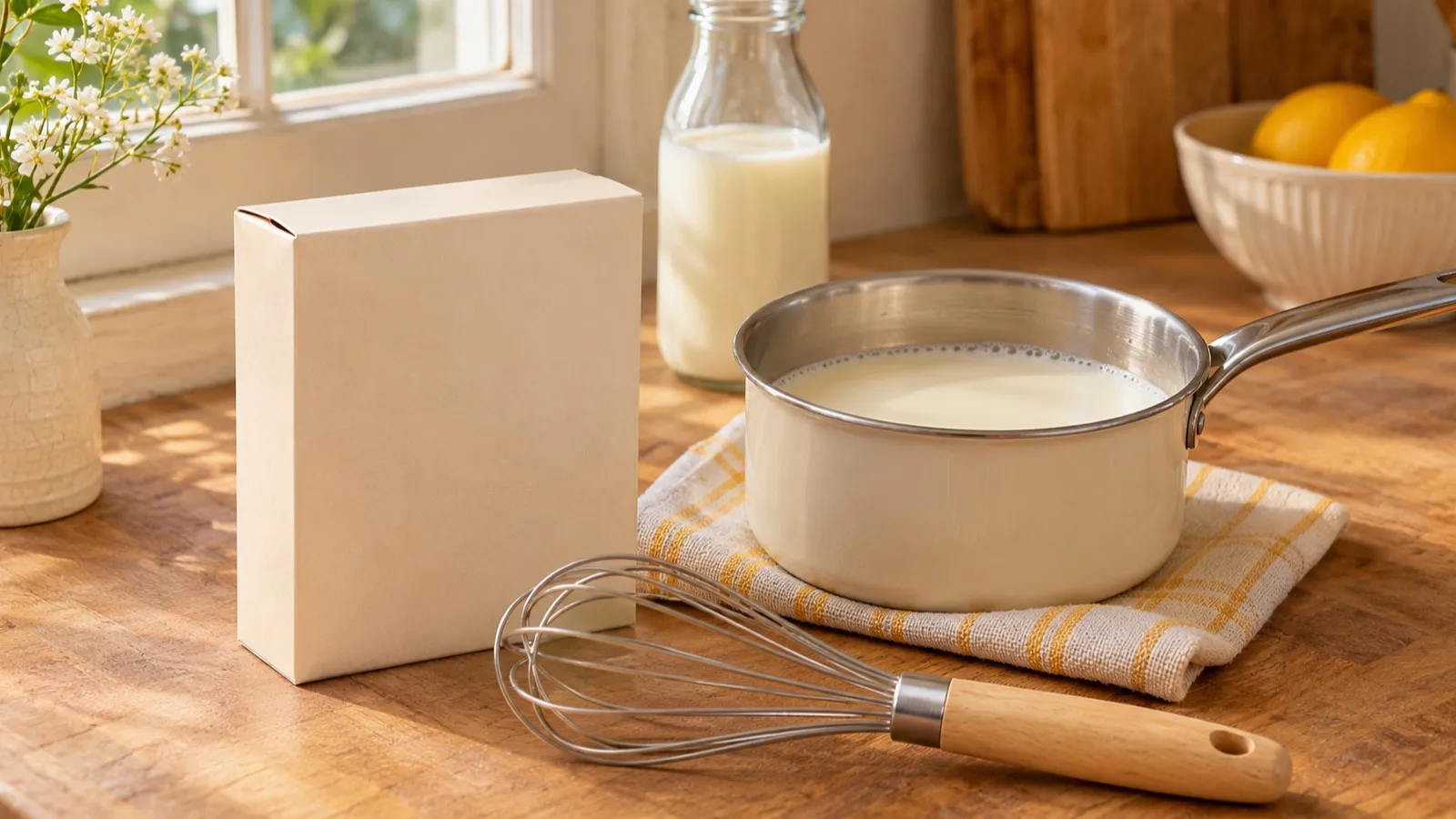
The milk goes into the saucepan before you’ve read the back of the pudding box properly. You already know how to make it. Stir, wait for the first bubbles, turn down the heat. Someone opens the cupboard looking for bowls and you tell them to use the small ones because there are only three of you.
Later, you try to record dessert. You find the packet, copy the largest-looking number in the table and add a line for the milk you poured. Only when you’re putting the box in the recycling do you see two words above the number: “as prepared.”
Now you have a fairly specific question. How much of the milk is already in the number you copied?
Read what the column is describing
Pick up the box and find the heading above the column. Depending on the product, you might see figures for the mix as sold, for the food as prepared, or both. Read the instructions next. A prepared figure may be based on making the pudding with a stated quantity and kind of milk. It might also describe a particular portion of the finished pudding.
Those are two checks: which ingredients are included, and how much finished food the value describes. They solve different problems. Once you know the milk is included, you still need to know whether the figure is per serving, per 100 grams or for the entire finished recipe.
This wording is useful outside the pudding aisle. EU food information rules, for example, allow nutrition information to refer to food after preparation where sufficiently detailed preparation instructions are provided. The instructions are part of what makes the prepared number interpretable. EU food information regulation, Article 31
Give yourself one route through the recipe
Here’s an example with invented numbers, so you can see the arithmetic without trying to match it to a particular brand. Say the whole dry mix adds up to 320 calories, and the milk you used adds 240. That gives you 560 for the recipe before dividing it into bowls. If you divided it into four equal servings, that’s about 140 each. If the boxes are numbered per 100 grams instead, scale each ingredient value to the amount you actually used before adding them together.
Now suppose the package already says 140 calories per prepared serving, based on that milk and four servings. You used the specified milk and divided the recipe the same way. You have the same estimate from the prepared column. Adding a quarter of the milk as its own line would take your diary to 200 for the bowl. The milk has gone into the entry twice, even though it only went into the saucepan once.
The two routes are simple when the recipe matches. Use the prepared value for the amount you ate, or add the dry mix and additions yourself. The same amounts should refer to the same portion. Keeping those steps together is what makes it easier to spot the double count.
What if you changed the milk?
The real complication is the milk already in the fridge. You used what you had. The box assumes something else. If it gives the dry values, start there and add the milk you poured. You can use the milk’s own label and the amount from your measuring jug.
If the box gives only prepared values, you may have an approximation rather than enough information to calculate the swap. How close it is depends on what the published number describes and how much your preparation differs from the instructions. A diary note saying “made with a different milk” preserves the detail you actually know. If you plan to make it regularly, next time you can save the packet or check whether the manufacturer provides a second set of nutrition figures.
The same judgment applies if you use part of a sachet, make a packet drink with water instead of milk, or add an egg to a boxed mix. Find the ingredient the prepared value assumes first. From there you can see what matches your kitchen and what changed.
Watch for numbers from two different stages
There’s an easy mistake to make even after you’ve chosen the right ingredients. A dry mix column may give numbers per 100 grams of powder. A prepared column may give numbers per 100 grams of pudding. Adding milk changes the weight of the food, so those columns aren’t directly comparable as measures of one bowl. Work with the amount of powder you used if you’re using the dry column. Work with the finished amount if you’re using a figure for prepared pudding.
The quickest way to catch a mix-up is to check what you’d put on the scale for the number you’re entering. A small pile of powder belongs with the dry values. The dessert in your bowl belongs with the prepared values. If your plan involves the powder weight, the prepared table and a separate entry for the milk, go back to the headings and choose a single route.
The serving question comes back at the table
Remember the three bowls from the cupboard? The box may describe four prepared servings. You can use that fact without pretending there were four people at dinner.
If you know the recipe total, you can estimate a bowl by the share you served. If you put a little pudding aside for tomorrow and the three portions are similar, you may already have a reasonable idea of your share. If you weigh the finished batch and your bowl, the fraction gives you another option. For a mixed pudding, that’s a straightforward kitchen estimate.
If you only have values per prepared serving and the box actually defines the amount in grams, you can use that to scale your bowl weight. When the reference amount is unclear, keep the entry rough. Adding a precise-looking number doesn’t recover a portion that went unmeasured.
Before tossing the next packet, I’d check two things: what the nutrition column assumes went into the saucepan, and what amount the number describes. Once you have those, you can decide whether a separate line for the milk belongs in your diary. If you want to see more examples of those small-print distinctions, see PixNutri’s guide to reading nutrition labels.
Sources
Written by the PixNutri Editorial Team. PixNutri provides general information, not medical advice. Learn how we work: Methodology · Nutrition sources · Editorial policy
Spotted a factual error? Report it to our editorial team. We review every report and update the page if needed.
