
The can went in the recycling. The liquid went down the sink.
The chickpeas are already in the salad when you remember the can. You turn around and find it in the recycling, balanced on top of an empty pasta box. You...
By PixNutri Editorial Team · Published November 23, 2026 · Last updated November 23, 2026 · 5 min read
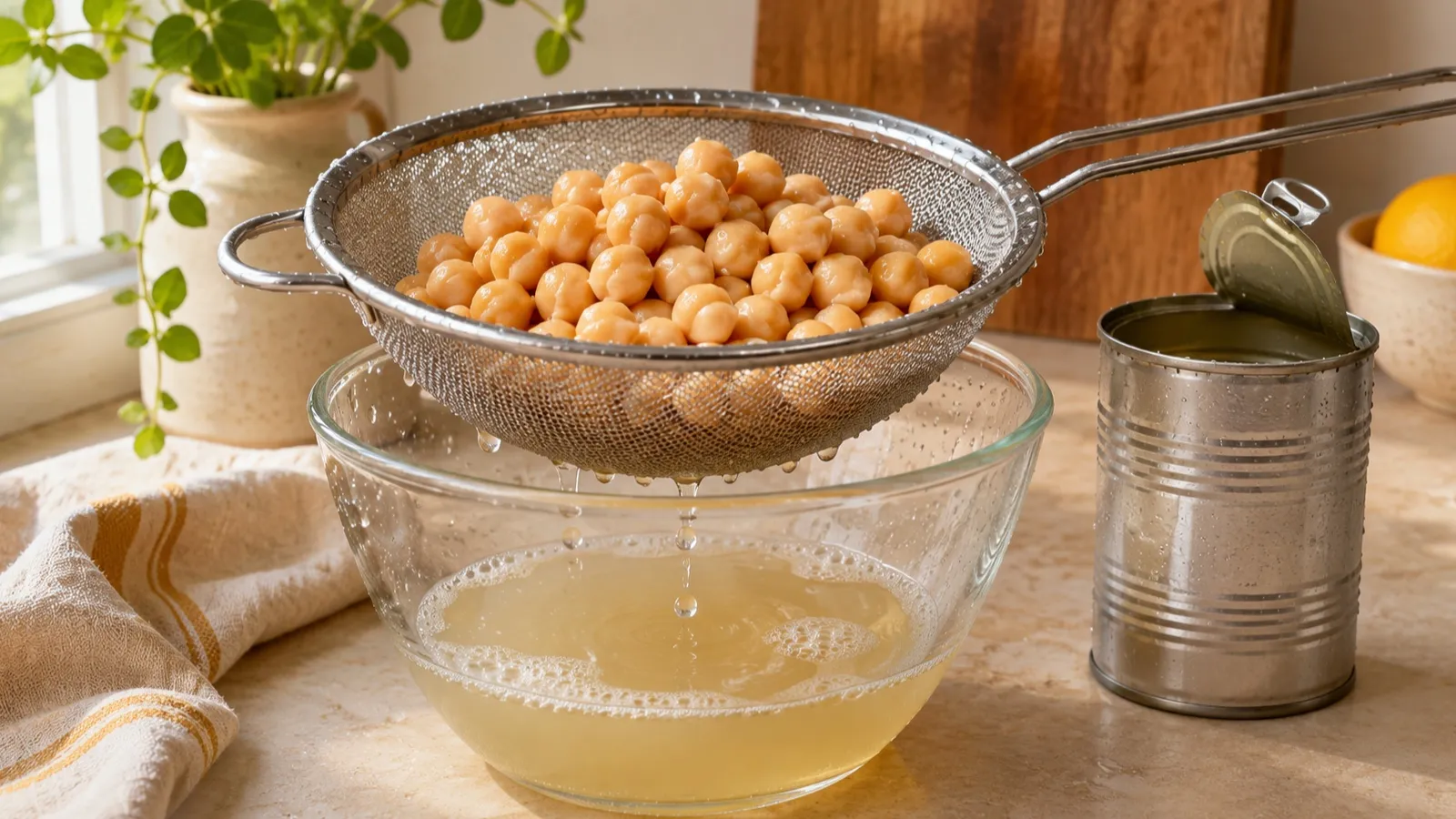
The chickpeas are already in the salad when you remember the can. You turn around and find it in the recycling, balanced on top of an empty pasta box. You pull it out and read the front. Four hundred grams. That sounds like more than the little pile you tipped out of the colander.
Then you find another weight on the can. Drained weight. The two numbers were there the whole time. You just had no reason to care about the difference until you tried to work out what went into lunch.
There are actually three quantities in this story. There’s the amount you bought, the amount that came out of the colander and the amount you ate. Once you know which question you’re answering, the rest gets easier.
Start with what you put in the bowl
If you drained the chickpeas and used all the solids, the drained weight on the can is a reasonable starting point for how much went into the salad. If you want to know what you actually used, put an empty bowl on the scale, zero it and transfer the chickpeas after draining. If you set some aside, weigh the amount that went into the recipe separately.
Here’s an illustrative example. The can lists 400 grams net and 240 grams drained. You drain it, then put 150 grams of chickpeas into lunch and keep the rest for tomorrow. The 400 grams describes what came in the can, including the liquid. The 240 grams describes the expected drained contents. The 150 grams is the portion you chose to use.
Those numbers can all be right at once. If you enter the full can weight against a reference for drained chickpeas, you’re using a quantity that includes something you poured away. If you enter the full drained weight but only used part of it, there’s a different mismatch. You can catch both by asking what actually made it into the dish.
Read the heading above the nutrition figures
After you’ve settled the portion, check what the nutrition values describe. Look for wording such as “drained” near the table or in a footnote. A weight printed elsewhere on the package can tell you what you bought without telling you which product state the nutrition table uses.
If the label clearly gives values per 100 grams of drained chickpeas, use your drained weight with those values. Suppose the package gives 125 calories per 100 grams drained and you use 150 grams. That would come to about 188 calories in this example. The heading and the amount on your scale describe the same food in the same state.
If the table gives a serving size, use the gram amount attached to that serving when you convert it. If the table’s basis is unclear, find a comparable reference specifically for canned, drained chickpeas and use that as an estimate. A listing for dry chickpeas describes a different stage of the ingredient. A listing for a seasoned chickpea salad may include dressing or other additions. The wording around the food name tells you what kind of estimate you’re getting.
That difference can matter more than finding another digit for the portion. There’s little benefit in debating whether the bowl held 149 or 150 grams if you’re about to use the wrong reference.
What if you rinse them or keep some of the liquid?
Rinsing changes what’s on the surface and can leave extra water in the colander. If you want repeatable kitchen measurements, drain the chickpeas in a similar way each time and weigh them after the water has stopped running off. If the available nutrition reference is for drained chickpeas and you rinsed yours as well, you have a useful approximation. The scale reading alone won’t tell you exactly how the rinse affected the nutrition.
Sometimes the liquid goes into dinner too. You might tip the whole can into a stew, or save the liquid for a recipe. In that case the drained solids are only part of the ingredient. Use a label or reference that describes the whole contents if one is available. If all you have is a reference for drained chickpeas, it can still describe the solids. Keep the liquid separate in your notes if it matters to the recipe you’re trying to reconstruct.
This is why a precise weight from the front of the can can be less useful than a few words about what you did at the sink. “Drained, some reserved” and “whole can into the stew” are genuinely different preparations.
The portion question comes back when you serve lunch
You can measure the chickpeas perfectly and still serve a different share of the salad from somebody else. Suppose you add 150 grams of chickpeas to a salad and split it with a friend. If you spoon some chickpeas into each bowl before adding the vegetables, you can choose how to divide them. If they’re already mixed, estimate your share from what you served. For a well-mixed salad, the fraction of the batch can be a reasonable starting point.
This is where I’d stop and look at lunch. If your bowl has mostly lettuce and your friend scooped up the chickpeas from the bottom, half the bowl weight is unlikely to describe half the chickpeas. If the two bowls look much alike, the batch estimate may be enough. You have the ingredients in front of you. That’s information worth using.
Later, when you open the container of leftover chickpeas, you don’t need to remember the original can size. Weigh what you’re using now, or note that you’re finishing the amount you set aside. The rest of the can already went into a different meal.
Leave yourself one clue next time
Before you toss the package, take a photo of the nutrition table if you’ll want it later. Include the wording that says whether the number refers to drained contents. Then record the amount you actually put into the dish. You can do both while the colander is still in the sink. By the time you’re eating, you’re free to think about whether the salad needs more lemon.
If you want a lunch to try it on, there’s a tuna and chickpea salad in PixNutri’s recipe collection. Set the can beside the colander and read the label while both are in reach. Then weigh what goes into the salad. That’s the number you’ll actually need when you sit down.
Written by the PixNutri Editorial Team. PixNutri provides general information, not medical advice. Learn how we work: Methodology · Nutrition sources · Editorial policy
Spotted a factual error? Report it to our editorial team. We review every report and update the page if needed.
